
Pet care
Cat Grooming at Home: Is It Less Stressful for Your Cat?
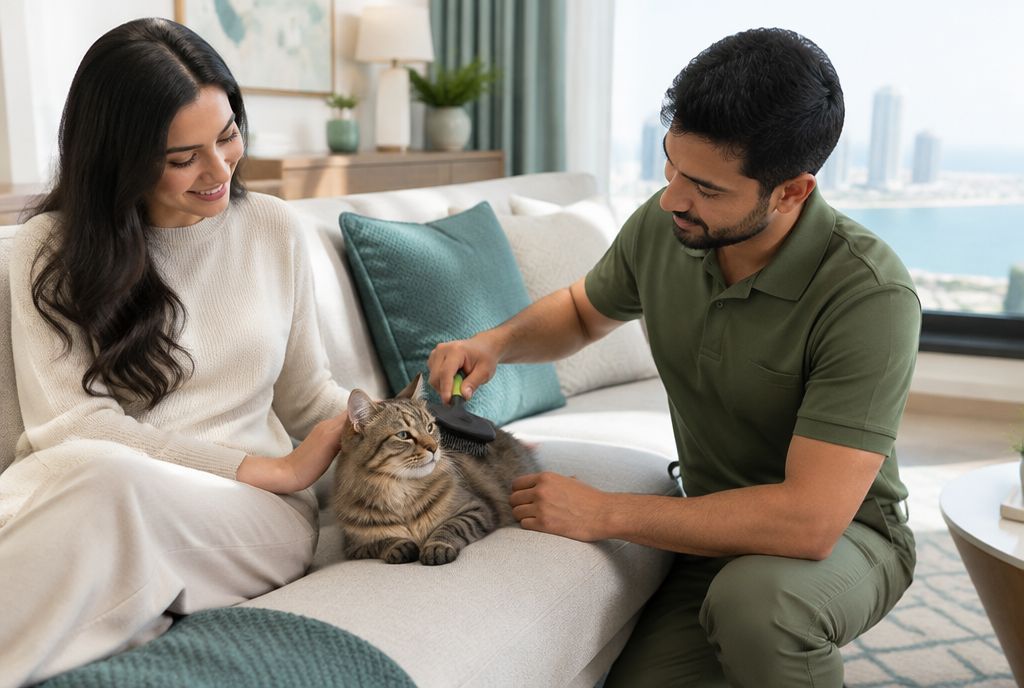
For many cats, yes: a home service cat grooming visit is less stressful than a trip to a salon, because the cat stays in its own territory and skips the carrier, the car and the smells of other animals. Cats are strongly attached to their environment, so taking the journey out of grooming often makes the biggest difference. It still depends on your cat's temperament, and some cats need a gentler approach whatever the setting.
Why travel is hard on cats
Most cats don't enjoy leaving home. For a salon visit, a cat has to:
- Be caught and put into a carrier
- Travel by car, often in heat for much of the year in the UAE
- Wait in a space that smells of dogs and other cats
- Be handled by strangers in an unfamiliar room
- Travel home again
Each step can raise a cat's stress level before grooming has even started. With cat grooming at home, the first four disappear.
What happens during cat grooming at home
- Settling in. A good groomer gives your cat time to notice them and approach before any handling begins.
- Health check. A look over the coat, skin, eyes, ears, claws and paws, with anything unusual pointed out to you.
- Brushing and de-matting. Loose undercoat and tangles are worked out carefully, as cat skin is thin and easy to nick.
- Bath, only if needed. Most cats keep themselves clean. A bath is usually reserved for cats with long coats, greasy coats, or cats that can't groom themselves well.
- Drying, done patiently with low noise where possible.
- Claw trim, taking off the sharp tips and avoiding the quick.
- Ear care, checking and gently cleaning the outer ear.
For what a full groom includes and the factors that affect its price, see cat grooming in Sharjah: prices and what's included.
Cats that benefit most from home grooming
- Long-haired cats such as Persians and Maine Coons, which mat easily and need regular attention
- Senior cats, which may struggle to groom themselves because of stiff joints
- Overweight cats, which can't reach their back and rear end
- Nervous cats, for which the journey is often the worst part
- Multi-cat homes, where several cats can be groomed in one visit
When home grooming may not be enough
Some cats are extremely fearful or aggressive when handled, wherever they are. Pushing on with a distressed cat isn't kind or safe. A good groomer will stop, try a shorter session, or suggest spreading the work across visits.
Severe matting is a vet matter. If your cat's coat is matted close to the skin over large areas, or the skin underneath looks sore, see a vet. Heavy mats can hide skin problems and may need to be removed under veterinary care.
How to prepare your cat for a home groom
- Choose a small, quiet room, such as a bathroom, with the door closed so your cat can't hide under a bed.
- Bring your cat into the room before the groomer arrives, rather than chasing it later.
- Keep other pets away, especially dogs.
- Avoid feeding a big meal just before, but have treats ready for afterwards.
- Tell the groomer about health problems, past bad experiences and how your cat reacts to handling.
Keeping the coat in good shape between visits
Short brushing sessions at home make every professional groom quicker and easier. Long-haired cats usually need brushing most days; short-haired cats benefit from a weekly brush, more during heavy shedding. In the UAE, cats living in air-conditioned homes can shed on and off all year, so regular brushing also reduces hairballs and hair on furniture.
Keep sessions short and positive. Stop before your cat gets annoyed, and finish with a treat. Check claws while you're at it, since indoor cats don't wear them down as fast.
Signs your cat needs grooming help
- Clumps or knots in the coat, especially behind the ears, under the legs and on the belly
- A greasy, dull or unkempt coat
- Dandruff or flaky skin
- Litter or faeces stuck in the fur around the rear
- Claws catching on carpets and furniture
A sudden change in how well your cat grooms itself can be a sign of pain or illness, so mention it to your vet.
Dogs and cats share many of the same grooming basics; our guide to dog grooming at home covers the dog side. At Tip Top, grooming at home covers bath, brush, nail trim and ear care, priced by animal and coat, and is available for cats, dogs and small animals in vaccinated homes.