
Pet care
Dog Walking in the UAE Heat: Safe Times, Routes and Paw Care
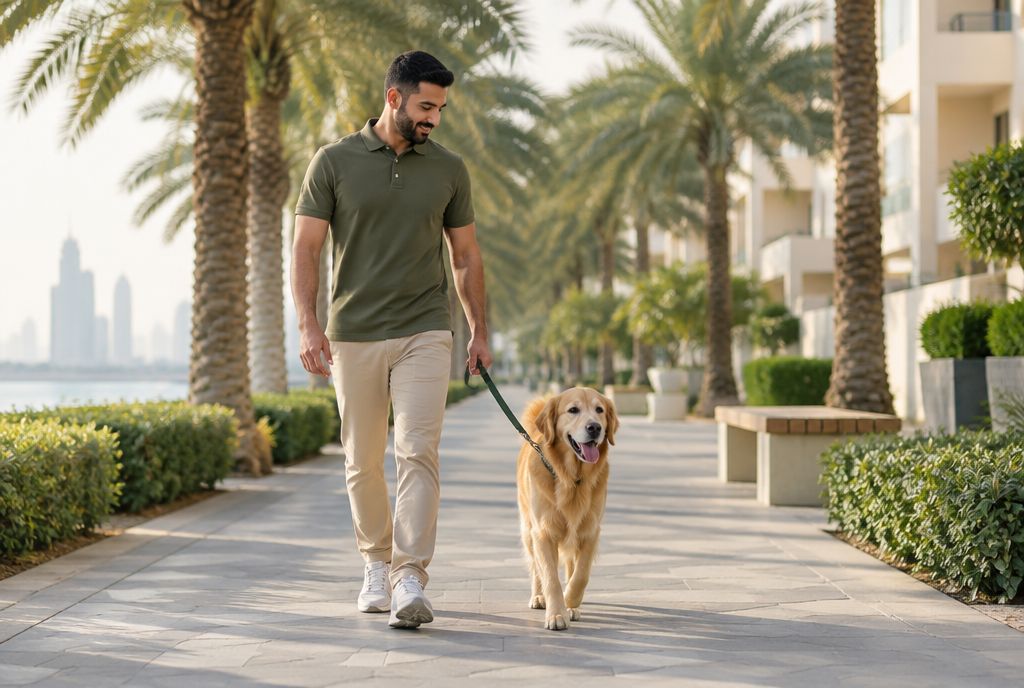
Dog walking in the UAE heat is safest early in the morning and later in the evening, when the sun is low and the ground has had time to cool. In the hottest months, keep walks short, stick to shade and grass, and test the pavement with your hand before your dog sets foot on it. Here's how to plan times, routes and paw care through the year.
The safest times for dog walking
From roughly late spring to early autumn, the middle of the day is too hot for most dogs to walk safely. Plan around the cooler hours of the day:
- Early morning, around sunrise, before the sun has heated the ground.
- Late evening, well after sunset. Pavements and sand hold heat for a long time, so the ground can still be hot even when the air feels bearable.
In the cooler months, from late autumn to early spring, you have more freedom, but sunny afternoons can still be warm for thick-coated or short-nosed dogs.
Humidity matters as much as temperature. Dogs cool themselves mainly by panting, which works less well in humid air, so a muggy evening can be harder on your dog than a dry one.
The back-of-hand test for hot pavement
Before a walk, press the back of your hand flat on the pavement, road or sand for about seven seconds. If it's uncomfortable for you to hold it there, it's too hot for your dog's paws. Dark asphalt, paving stones and sand can heat up far more than the air, and can burn paw pads.
If in doubt, don't walk. On a very hot day, a short toilet break on grass or a shaded patch is enough. Indoor games, sniffing puzzles and training make up for the missed walk.
Choosing routes in Sharjah
- Shade first. Pick routes with trees or buildings that shade the path, and walk on the shaded side.
- Grass over pavement. Grass stays much cooler than paving, asphalt or sand.
- Keep it short in summer. Plan a loop close to home so you can turn back quickly if your dog starts to struggle.
- Avoid open sand during the day. It gets very hot and offers no shade.
- Watch for hazards. Litter, broken glass and spilt chemicals around buildings and car parks can injure paws.
Dog paw protection
- Check paws after every walk for redness, blisters, cracks, cuts or anything stuck between the toes.
- Keep nails trimmed. Long nails change how a dog walks and can make paws more prone to injury. Regular grooming helps; see our guide to dog grooming at home.
- Consider dog boots if your dog will wear them, introduced slowly at home first. They don't make it safe to walk on very hot ground.
- Rinse off sand and dust after walks, and dry between the toes.
If a paw pad looks burnt, blistered or raw, cool it gently with water and see a vet.
Know the signs of heat stroke
Heat stroke can develop quickly and is an emergency. Watch for:
- Heavy, fast panting that doesn't settle with rest
- Excessive drooling or thick saliva
- Bright red, dark or pale gums
- Weakness, wobbling or stumbling
- Vomiting or diarrhoea
- Confusion or collapse
If you see these signs, move your dog into shade or an air-conditioned space straight away, offer small amounts of water, wet the coat with cool (not ice-cold) water, and see a vet urgently, even if your dog seems to recover.
Dogs at higher risk
- Short-nosed breeds such as pugs, bulldogs and boxers
- Puppies, older dogs and overweight dogs
- Dogs with heart or breathing problems
- Thick-coated breeds, especially if the coat is matted
A brushed, mat-free coat lets air reach the skin. Don't shave a double-coated dog to keep it cool unless your vet advises it; the coat helps regulate temperature, and removing dead undercoat is usually better. Long-haired cats benefit from the same care, even though they stay indoors; our guide to cat grooming at home explains more.
What to take on every walk
- Water and a collapsible bowl
- Poo bags
- A well-fitting harness or collar with an ID tag
- Your phone, with your vet's number saved
Using a dog walker
If you work long hours, a dog walker can keep your dog's routine going. Ask any dog walker when they walk in summer, how long walks last and how they'll update you. A walker who plans midday walks in July isn't taking the heat seriously. Tip Top's walks take place at the cooler hours of the day and are timed and logged, so you know when your dog went out and for how long.