
Pest control
Early Signs of Bed Bugs and What to Do in the First 48 Hours
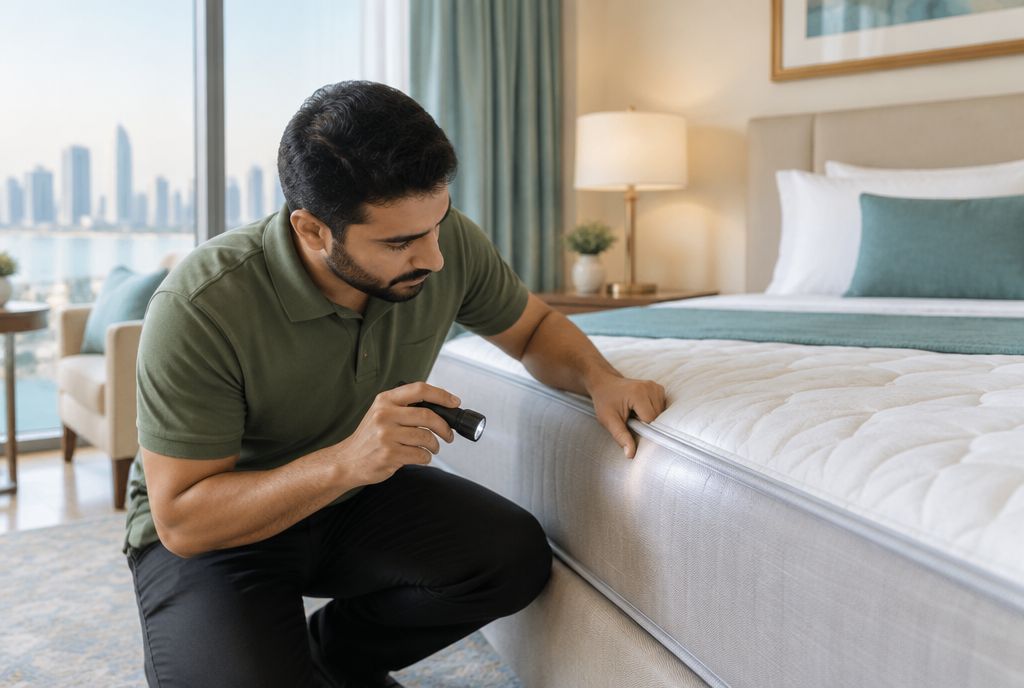
The early signs of bed bugs are small rust-coloured or dark spots on sheets and mattress seams, tiny pale shed skins or eggs in crevices, and itchy bites that appear overnight, often in a line or cluster on exposed skin. If you spot any of these, the first 48 hours matter: confirm what you've found, contain it to the room it's in and arrange a professional inspection. Acting quickly keeps a small problem from spreading through the home.
The early signs of bed bugs
On the bed
- Small dark or rust-coloured spots on sheets, pillowcases or the mattress. These can be droppings (dark, like ink dots that smear when wet) or small blood marks.
- Pale, empty shed skins along seams and piping.
- Tiny white eggs, about the size of a pinhead, stuck in folds and crevices.
- Live bugs: adults are flat, oval and reddish-brown, roughly the size of an apple seed. Young ones are smaller and paler.
On you
- Itchy bites that appear overnight, often on the arms, neck, shoulders or legs.
- Bites in a line or small cluster, though this isn't always the case.
Bites alone don't confirm bed bugs. People react differently, some people don't react at all, and bites from mosquitoes or other insects can look similar. Look for physical signs as well. If bites become infected, cause a strong reaction or worry you, see a doctor.
Elsewhere
- Spots or shed skins on sofa seams, under cushions and in armchair joints
- Marks behind headboards, along skirting near the bed or on curtain folds
- A faint, sweet, musty smell in heavier infestations
How to check for bed bugs
You'll need a torch, a thin card (such as an old bank card) and good light. Work methodically:
- Strip the bed and check the sheets and pillowcases for spots before putting them straight into a sealed bag.
- Check the mattress seams, piping, labels and corners, running the card along seams to push anything hidden into view.
- Lift the mattress and check the base, slats and the bed frame joints and screw holes.
- Check the headboard, especially the back and where it meets the wall.
- Check bedside tables, inside drawers and their joints.
- Check sofas and armchairs where people sit for long periods.
- Check skirting boards, curtain folds and the edges of carpets near the bed.
Take clear, close-up photos of anything you find. They help a professional confirm what it is and plan the next step.
What to do in the first 48 hours
First 24 hours: confirm and contain
- Don't panic, and don't move to another room to sleep. Sleeping on the sofa or in a child's room can spread bed bugs to a new area.
- Bag bedding and clothes from the affected room in sealed bags. Wash them on the hottest setting the fabric allows and dry them on high heat, then keep them sealed.
- Vacuum the mattress, bed frame and floor around the bed. Empty the vacuum into a sealed bag and take it straight to an outside bin.
- Don't move furniture or belongings out of the room unless they're sealed in bags first.
- Don't throw out the mattress yet. Carrying it through the home or building can spread bugs, and it may be treatable.
Next 24 hours: get a professional inspection
- Contact a pest control provider and share your photos. Ask what the inspection involves and how they'll prepare you for treatment.
- Think about where they came from: recent travel, guests, second-hand furniture or a neighbour's flat. That helps the inspection.
- Tell your landlord or building management if you're in an apartment. Bed bugs can move between flats.
- Check luggage if you've travelled recently, and keep it away from beds.
Avoid shop-bought sprays and foggers. They rarely reach the bugs in seams and cracks, can drive them deeper into furniture or into other rooms, and can make professional treatment harder. Never mix products, and keep children and pets away from anything you've applied.
What comes next
Bed bugs almost always need professional treatment, and usually more than one visit. Our guide to bed bug treatment explains what professionals do and how to prepare. If you're comparing providers, see how to choose the best pest control service in Sharjah for the questions to ask.
Preventing bed bugs
- When you travel, keep luggage on a rack or hard surface, not on the bed, and check the hotel mattress seams.
- When you get home, unpack straight into the washing machine and check the suitcase before storing it.
- Inspect second-hand furniture, especially beds and sofas, before bringing it in.
- Check the bed occasionally as part of changing the sheets.
Not every bite is a bed bug. If you have a garden, mosquitoes are a common cause of night-time bites; see mosquito control around villas and gardens. For an overview of Sharjah's common household pests, read the pest control guide for Sharjah.