
Pest control
Bed Bug Treatment: How Professionals Clear a Sharjah Apartment
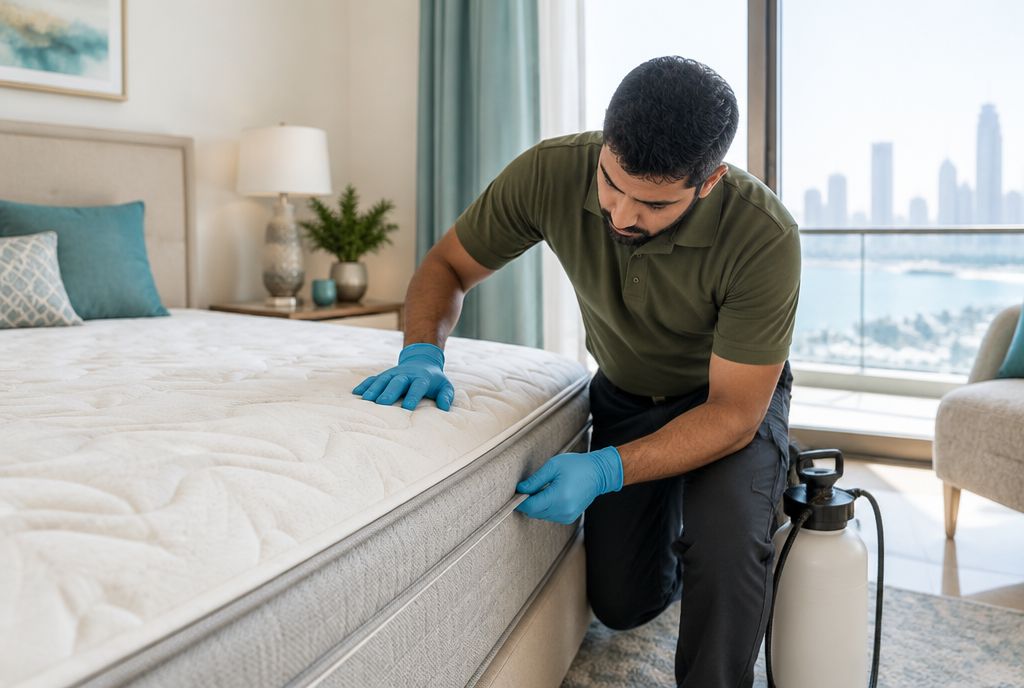
Professional bed bug treatment clears a Sharjah apartment through careful inspection, thorough preparation, targeted treatment of every hiding place and at least one follow-up visit. Bed bugs are rarely cleared in a single session, because their eggs can survive the first treatment. This guide walks through what bed bug pest control involves, how many treatments are usually needed and what you'll be asked to do.
Why bed bugs are hard to clear
Bed bugs are small, flat and very good at hiding. They live close to where people sleep or sit for long periods: mattress seams, bed frames, headboards, sofa joints, behind skirting boards, inside electrical faceplates and in the folds of curtains. They feed at night and can survive a long time between meals. Their eggs are tiny and stick to surfaces. In apartments they can also move between flats along walls and pipe routes.
Shop-bought sprays tend to kill only the bugs they touch directly, and can drive the rest deeper into furniture or into the next room. That's why bed bugs are one of the pests where professional treatment makes the biggest difference. If you're not yet sure what you're dealing with, start with our guide to the early signs of bed bugs.
Step 1: inspection
A technician confirms that the problem is bed bugs and maps how far it has spread. They'll check:
- mattress seams, piping, labels and the box base or divan
- bed frame joints, screw holes and the back of the headboard
- bedside tables, drawers and wardrobes
- sofas and armchairs, especially seams and under cushions
- skirting boards, curtain folds, picture frames and sockets near beds
- other bedrooms and the living room, even if nobody has been bitten there
They're looking for live bugs, pale shed skins, eggs and small dark spots of digested blood. The inspection decides which rooms are treated and how many visits are likely.
Step 2: preparation
Preparation is a big part of bed bug treatment, and skipping it is one of the main reasons treatment fails. Follow your provider's specific instructions, but expect something like this:
- Strip the beds. Bag bedding, curtains and clothes from affected rooms in sealed bags, then wash them on the hottest setting the fabric allows and dry them on high heat.
- Declutter. Clear items from under beds and off the floor. Clutter gives bugs more places to hide.
- Don't move things to other rooms without bagging them first, or you may spread the problem.
- Empty bedside drawers and wardrobes if asked.
- Vacuum mattresses, floors and furniture, then empty the vacuum into a sealed bag and put it in an outside bin.
- Pull beds slightly away from walls so the technician can reach behind them.
Step 3: bed bug treatment
Methods vary between companies, and a good provider will explain theirs before starting. In general, professional treatment focuses on the places bed bugs actually live, working along seams, joints, cracks and voids rather than spraying open surfaces. Some providers also use non-chemical methods such as heat or steam on certain items. Ask which method will be used, why it suits your home, and what it means for children, pets and anyone with health conditions.
Before treatment, ask: what will be used, which rooms will be treated, how long everyone (including pets) must stay out, and what you can and can't clean afterwards. If anyone in the home is pregnant, has a baby, or has asthma or another health condition, tell the provider and check with your doctor.
How many pest control treatments for bed bugs?
Most bed bug problems need more than one treatment. The first visit deals with the active bugs; a follow-up, usually a couple of weeks later, catches young bugs that hatched from eggs which survived. Larger or longer-standing problems may need further visits. The exact number depends on how widespread the problem is, how well the home was prepared and whether neighbouring flats are affected. Ask your provider to tell you up front how many visits they expect and what's included in the price.
After treatment
- Stay out of treated rooms for as long as you're told, and ventilate when you're allowed back in.
- Keep sleeping in your own bed if the technician advises it. Moving to the sofa can spread bugs to a new area.
- Don't vacuum or wipe treated seams and cracks until the provider says it's fine.
- Keep washed bedding and clothes in sealed bags until the problem is cleared.
- Watch for new signs and report them before the follow-up visit.
Bites usually settle on their own, but see a doctor if they become infected, if you have a strong reaction, or if you're worried.
Mattresses, sofas and the clean-up
Many mattresses can be saved after treatment; ask your provider before throwing anything out, because carrying an infested mattress through the building can spread bugs. If you do dispose of furniture, wrap it fully first. Once the infestation has cleared, a professional mattress and sofa clean removes stains and residue. See professional mattress cleaning for what that involves.
Bed bugs vs other pests
Bed bugs need a very different approach from other household pests. For an overview of the pests most common in Sharjah homes and how general pest control works, see our pest control guide for Sharjah. If you live in a villa and are also seeing droppings or gnaw marks, read about rodent control in villas, and raise everything at the same pest control assessment.