
Home cleaning
How to Remove Mould From a Bathroom (and Stop It Coming Back)
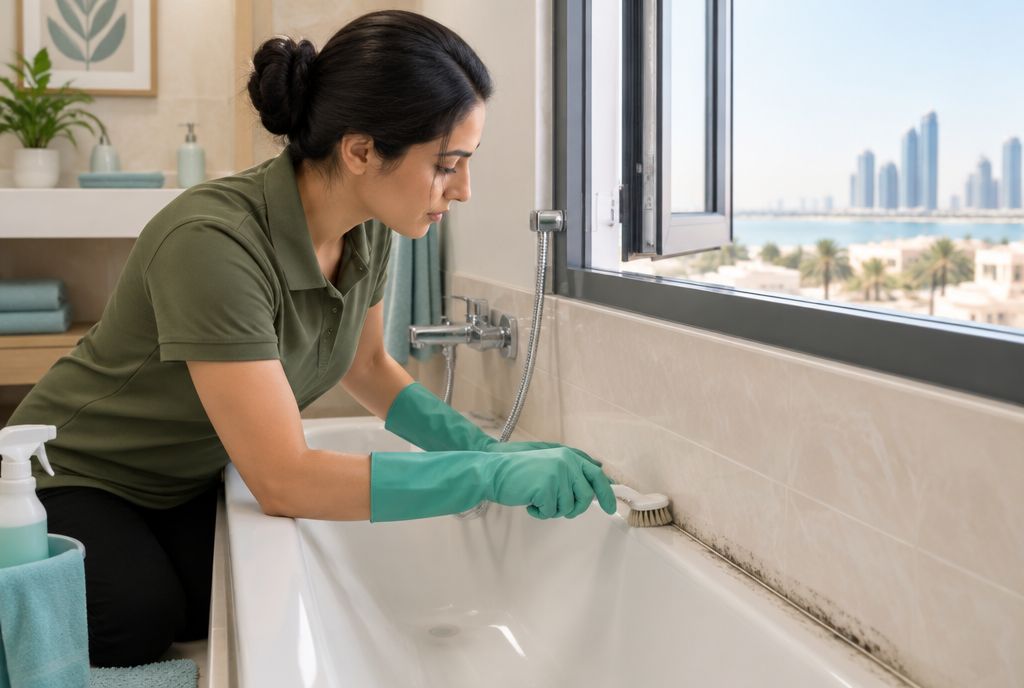
To remove mould from a bathroom, ventilate the room, protect your hands and eyes, apply a bathroom mould remover (or a mild DIY solution) to the affected grout, sealant or ceiling, leave it to work, then scrub, rinse and dry the area thoroughly. Surface mould usually comes off with this approach; mould that has grown into silicone sealant usually means the sealant needs replacing. Stopping it coming back is mostly about keeping the room dry.
Why bathrooms get mould
Mould needs moisture, warmth and something to grow on, such as soap scum, body oils or dust on grout. Bathrooms supply all three. In UAE homes, the risk is higher in:
- bathrooms with no window and a weak or rarely used extractor fan
- en-suites with the door kept closed and the AC running in the bedroom
- guest bathrooms that stay closed for weeks
- corners and ceilings above the shower, where steam settles
Before you start
- Ventilate: open the door and any window, and turn on the extractor fan.
- Protect yourself: wear rubber gloves, and eye protection if you're cleaning a ceiling. A mask is sensible for larger patches.
- Read the label of any product and follow its contact time and safety advice.
- Keep children and pets out of the room while you work and until it's aired.
Never mix products. Bleach-based mould removers must not be mixed with vinegar, limescale removers, ammonia or other cleaners, as this can release harmful gases. Use one product, rinse it off, and ventilate before using anything else.
How to remove mould from bathroom surfaces
Grout and tiles
- Dry-brush any loose debris off first.
- Apply a bathroom mould remover, or a solution of white vinegar for light marks.
- Leave it for the time on the label, or a while for vinegar.
- Scrub along the grout lines with a stiff grout brush or old toothbrush.
- Rinse with clean water and dry the area fully.
If grout stays dark after a few treatments, the stain may be in the grout itself. Regrouting and then sealing the new grout is often the lasting fix.
Silicone sealant
Treat the surface in the same way. If black spots remain, the mould has grown into the sealant and can't be cleaned out. The fix is to cut out the old sealant, clean and dry the joint completely, and apply new sealant, ideally one designed for bathrooms with mould resistance. A handyman can do this if you're not comfortable doing it yourself.
Ceilings and walls
Use a product suitable for painted surfaces and test it on a small area first, as some remove paint. Apply with a sponge or cloth rather than spraying overhead, then wipe and let it dry. If mould returns to the same spot quickly, consider anti-mould bathroom paint once the area is clean and dry.
Shower curtains, bathmats and towels
Wash fabric items on the hottest setting the label allows. Replace shower curtains or liners that stay marked after washing.
When it's more than surface mould
Cleaning deals with mould on surfaces. It won't fix the cause if moisture is coming from somewhere else. Contact your landlord or maintenance team if:
- mould keeps coming back to the same patch of wall or ceiling
- paint is bubbling or plaster feels soft or damp
- there's a patch on a wall that backs onto the shower or another wet area
- the extractor fan isn't working
- there's a large area of mould, or a persistent musty smell
These can point to a leak or a ventilation problem that needs repair.
Mould can trigger symptoms in some people, particularly those with allergies, asthma or weakened immunity. If anyone at home has breathing problems or symptoms that seem linked to damp, see a doctor, and avoid having them clean the mould themselves.
How to stop mould coming back
- Run the extractor fan during every shower and for a while after.
- Squeegee the walls and glass after showering to remove standing water.
- Leave the door open afterwards, so damp air can escape.
- Dry towels and bathmats outside the bathroom where you can.
- Clean grout weekly so soap scum doesn't build up.
- Air guest bathrooms regularly, opening the door and running the fan for a while.
- Check the extractor fan: hold a sheet of tissue up to it. If it isn't pulled towards the fan, it may need cleaning or repair.
- Check AC vents too: a musty smell in the room next door may come from the AC rather than the bathroom.
When to call in professionals
A professional bathroom deep clean is useful when mould has spread across grout and ceilings, alongside limescale and soap scum, or when you'd rather not handle strong products yourself. A good team will treat the surface mould, tell you honestly where sealant needs replacing and point out signs of a leak. See our guide to deep cleaning services in Sharjah for what a full clean includes. For keeping on top of it afterwards, our comparison of monthly cleaning plans and hourly maids may help, and our guide to house cleaning services in Sharjah covers what a professional visit includes. Tip Top uses low-odour, non-toxic products as standard, safe around children and animals.