
Pest control
Termite Control for Sharjah Villas: Signs, Treatment and Prevention
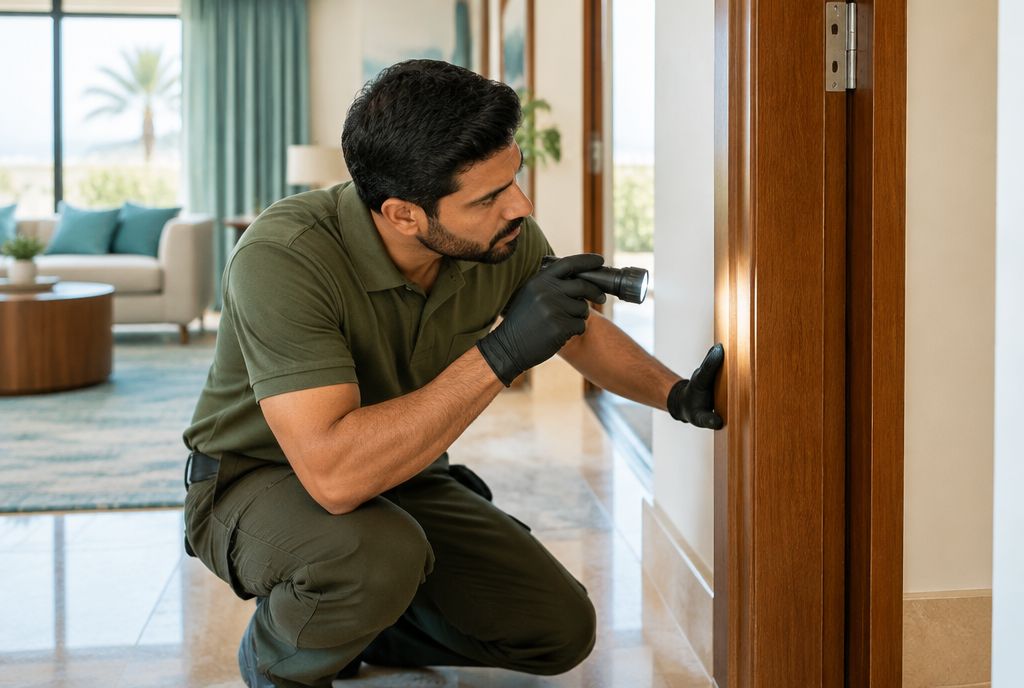
Termite control for a Sharjah villa starts with spotting the signs early: mud tubes on walls, hollow-sounding wood, blistered paint and piles of discarded wings. Professional treatment then targets the colony and the routes termites use to reach the house, rather than just the damaged wood. This guide covers the warning signs, how treatment generally works and how to make your villa less inviting.
Why villas are at risk
Most termites that damage homes live in the soil and travel into buildings in search of wood and other cellulose, such as paper and cardboard. Villas sit directly on the ground and often have gardens, irrigation, wooden pergolas, timber decking and built-in wooden wardrobes and door frames. Moist soil next to the walls, from irrigation or a leaking pipe, makes it easier for termites to survive close to the house. They work out of sight, so damage can build up for some time before anyone notices.
Signs of termites in a villa
- Mud tubes: thin, pencil-width tunnels of soil running up walls, foundations, skirting or the back of cupboards. Termites build them to stay protected while they travel.
- Hollow or soft wood: door frames, skirting boards or cupboard bases that sound hollow when tapped or give way when pressed.
- Blistered or bubbling paint on wood or walls, sometimes mistaken for damp.
- Discarded wings near windows, doors or light fittings, often after winged termites swarm.
- Doors and windows that start to stick, because damaged frames shift.
- Damage in stored items: cardboard boxes, books or paperwork in storerooms with tunnels or soil inside.
- Fine, earthy debris around wooden fixtures.
If you find mud tubes, don't break them open and spray them. Disturbing termites can send them to another part of the building and makes it harder for a professional to see where they're active. Take photos, note where you saw them, and arrange an inspection.
How professional termite control generally works
Methods vary between providers, and the right approach depends on the type of termite, the building and how far the problem has spread. Ask any company to explain its plan. In general, termite control involves:
Inspection
A thorough inspection covers the inside and outside of the villa: door frames, skirting, wardrobes, kitchen cabinets, storerooms, the garden, boundary walls, decking and any timber in contact with soil. The technician looks for live activity, the entry route and the extent of the damage.
Treatment
Common professional approaches include treating the soil around and under the building to create a protective zone, installing bait stations that termites carry back to the colony, and localised treatment of affected wood. Some homes need a combination. Treatment may involve drilling small holes in floors or along walls to reach the soil, so ask what work will be done and how it will be finished afterwards.
Monitoring
Termite control is rarely a one-day job. Bait systems in particular need checking over time. Ask how long the treatment is expected to protect the property, what any warranty covers, and how often follow-up inspections happen.
Questions to ask before you book
- What type of termite is this, and where are they coming in?
- Which treatment do you recommend, and why that one for my villa?
- Will you drill or lift anything, and how will it be made good?
- What products will be used, and how long must children and pets stay away from treated areas?
- Are vegetable beds, fish ponds or pools near the treatment zone a concern?
- How many visits are included, and what does any warranty cover?
For more on planning treatment around animals, see is pest control safe for pets and children?
Prevention: making your villa less attractive
- Keep soil and wood apart. Don't let timber decking, planters, fence posts or stored wood rest directly on soil next to the house.
- Control moisture. Fix leaking pipes, AC condensate lines and irrigation that wets the walls. Point sprinklers away from the building.
- Clear the perimeter. Keep a gap between garden beds, mulch and the villa walls.
- Store paper and cardboard off the floor, ideally in plastic boxes, especially in storerooms and garages.
- Inspect regularly. Walk around the outside of the villa every few months and check door frames, skirting and storerooms inside.
- Before renovations or new woodwork, ask your contractor about termite protection.
Is it termites or something else?
Not all wood damage is termite damage. Gnaw marks with droppings nearby point to rodents, and soft, crumbly wood with a musty smell may be rot from a leak. A professional inspection is the reliable way to tell. For an overview of the pests Sharjah homes most often deal with, see our pest control guide for Sharjah.
Getting it checked
If you've spotted any of the signs above, ask about termites during your pest control assessment, so the provider can tell you what's involved before any work starts. Termite work is priced on the property and the treatment needed rather than a flat rate; our guide to pest control prices in Sharjah explains the factors.