
Upholstery
How Professionals Deep Clean a Couch (and When DIY Is Enough)
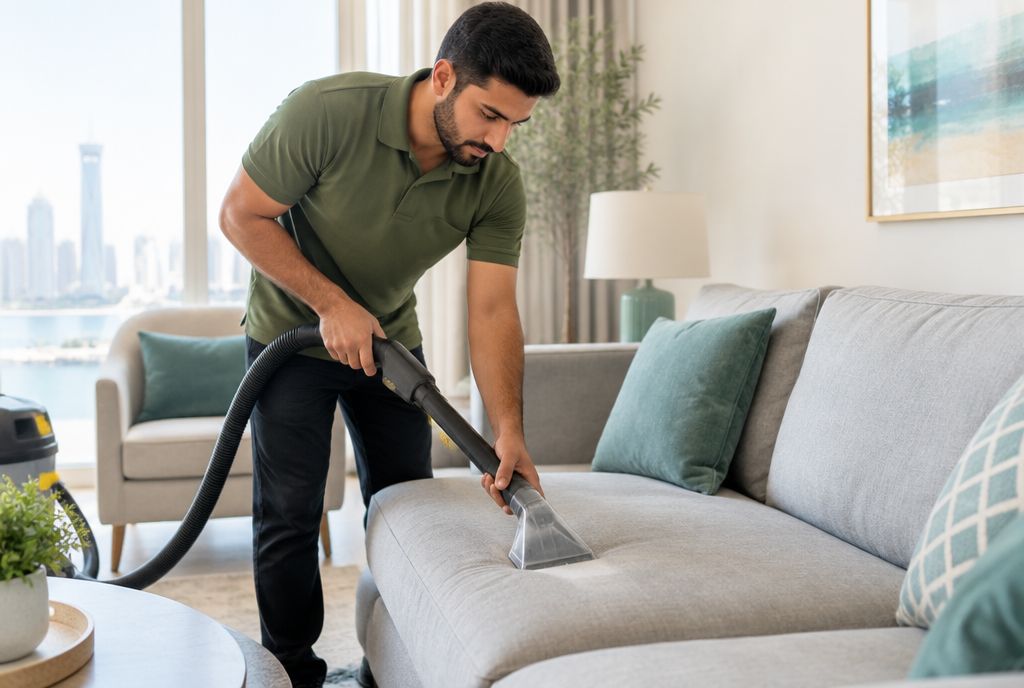
Deep cleaning a couch professionally means removing what sits below the surface, such as ground-in dust, body oils, old spills and odours, using a method matched to the fabric, usually extraction for durable fabrics and low-moisture cleaning for delicate ones. DIY is enough for regular upkeep and fresh spills; a professional deep clean is worth it when the couch looks dull or patchy, smells stale, or has stains you can't shift.
What "deep cleaning" a couch actually means
Surface cleaning deals with what you can see: crumbs, hair and a fresh spill. Deep sofa cleaning goes further, into the fibres and the top of the cushion filling, where most of the dirt really is. In the UAE that includes a surprising amount of fine dust and sand, which acts like sandpaper on fabric every time someone sits down, plus sweat and body oils that build up on arms, seat fronts and headrests during the long hot months.
How professionals deep clean a couch, step by step
- Inspection and fabric check. The technician reads the care label, checks the fabric type and looks at stains and wear. If there's no label, a small test is done on a hidden area, such as the back or under the deck.
- Thorough dry vacuuming. Using upholstery tools and crevice tools, they remove loose dust, sand, hair and crumbs from every surface, seam and gap, and under the cushions. Wetting a sandy couch turns grit into mud, so this step matters.
- Pre-treatment. Heavily soiled areas and stains get a pre-spray matched to the soil type. Body oils, food, drinks and protein stains like urine each respond to different chemistry. The product is given time to work.
- Agitation. A soft brush works the pre-treatment into the fabric to loosen dirt without roughing up the pile.
- Extraction or low-moisture clean. For most fabrics, a cleaning solution is applied and immediately extracted with strong suction, rinsing dirt and residue out of the fibres. Delicate fabrics get a gentler low-moisture method instead.
- Spot work. Remaining marks are re-treated where it's safe to do so.
- Odour treatment where needed, particularly in pet homes.
- Grooming and drying. The fabric is brushed in one direction so it dries evenly, and cushions are stood up to let air reach all sides.
Leather couches follow a different route: a leather-specific cleaner, a gentle wipe-down and conditioning, with no soaking.
Why the professional result is different
- Extraction power. Professional machines remove far more water and dirt than domestic machines or hand scrubbing, so the couch dries faster and less residue is left behind.
- Matched chemistry. The right product for the fabric and the stain, rather than one all-purpose spray.
- Less risk. Over-wetting causes water rings, brown marks, shrinkage and musty smells. Experienced technicians control the moisture.
- Even results. Cleaning the whole couch evenly avoids a "clean patch" next to a dull area.
When DIY is enough
Most couches don't need a professional clean every month. A careful home routine handles a lot:
- Weekly vacuuming with an upholstery attachment, including under the cushions.
- Fresh spills, blotted straight away with a clean white cloth and a little water or a mild solution, if the fabric code allows water.
- Light freshening by airing the room and fluffing cushions.
- Removable covers that the label says can be washed, cleaned as instructed.
Our guide on how to clean a sofa at home covers safe methods step by step.
When to call a professional
- The fabric looks dull, grey or patchy, especially on arms and seat fronts
- There's a smell that comes back after airing
- Pet urine has soaked into a cushion
- Stains have set or spread after home treatment
- The fabric is coded S or X, or you don't know the code
- Someone in the home has allergies that seem worse on the couch
- You're moving in or out, or getting ready for guests
Avoid the common DIY mistakes: soaking the fabric, rubbing stains, using strong household chemicals, and mixing products. Never mix cleaning products. If a stain doesn't move with a gentle approach, stop and leave it for a professional.
How long a deep-cleaned couch takes to dry
A professionally extracted couch is left damp, not wet. Drying time depends on the fabric, the cushion thickness, the method and the room's airflow, so ask the technician what to expect for yours. Run the AC, use a fan if you have one, and keep people and pets off until it's dry. The same principles apply to carpets, as explained in our guide on how long carpets take to dry.
Deep cleaning other soft furniture
The method described above is the same one used for armchairs, dining chairs, headboards and ottomans, with small changes for each. Mattresses are similar but have their own considerations, such as dust mites and the decision between cleaning and replacing; see mattress cleaning in Sharjah and our general guide to professional mattress cleaning.
At Tip Top, sofa cleaning is priced per item, our products are low-odour and non-toxic as standard, and the price is confirmed after a quick on-site or photo-based assessment.