
Upholstery
How to Clean a Sofa at Home Between Professional Cleans
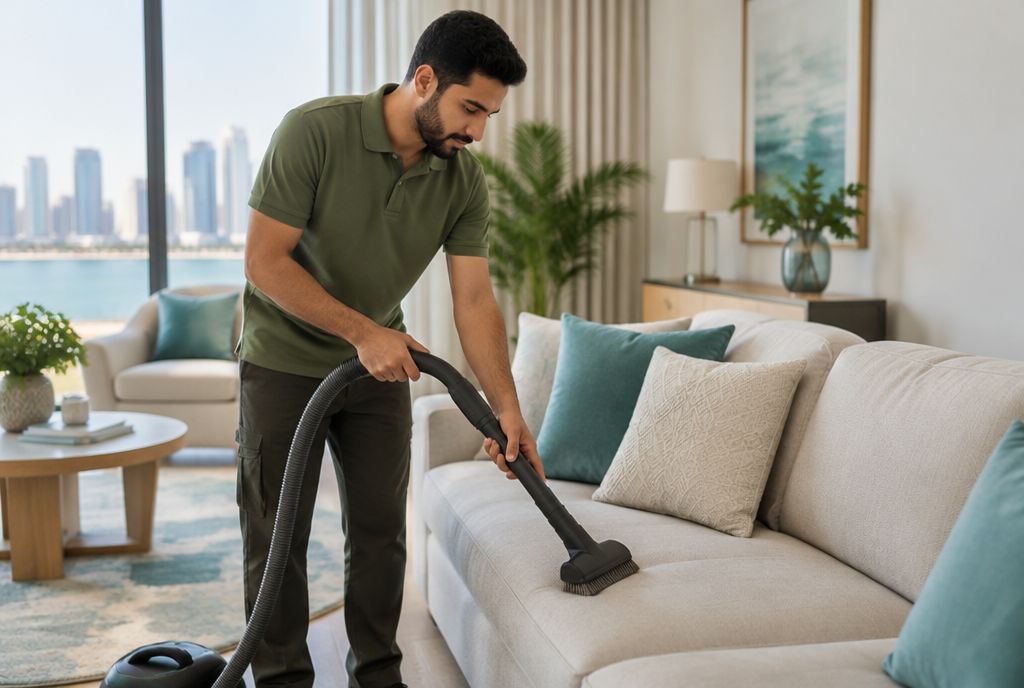
To clean a sofa at home, check the care label first, vacuum it thoroughly, then treat marks gently with the method the label allows: usually a little lukewarm water and a few drops of mild washing-up liquid on a clean white cloth, blotting rather than rubbing. Always patch-test on a hidden area, never soak the fabric, and dry it quickly with the AC and a fan.
Step 1: read the care label
Look for a label under the seat cushions, on the deck of the sofa or underneath the frame. Many manufacturers use a letter code, a standard furniture-industry convention:
- W: water-based cleaning is fine.
- S: solvent-based cleaning only. Water may leave marks.
- W/S: either can be used.
- X: vacuum only. No water or cleaning products.
Treat this as general guidance and follow your manufacturer's own instructions where they differ. Our guide to upholstery fabric codes explains them in more detail. If the label says S or X, or there's no label at all, keep home cleaning to vacuuming and leave anything wetter to a professional.
Step 2: vacuum everything
This is the most useful thing you can do, and it's safe for every fabric. Remove the cushions and vacuum:
- the seat deck underneath the cushions
- both sides of every cushion
- the arms, back and sides
- seams and crevices, with the crevice tool
In UAE homes, you'll often find a surprising amount of fine sand. Getting it out before any liquid touches the fabric stops it turning into muddy marks. A soft brush helps loosen pet hair; a slightly damp rubber glove run over the fabric also gathers hair well.
Step 3: patch-test
Before treating a stain, test your cleaning solution on a hidden area, such as the back of the sofa near the floor or the underside of a cushion. Apply a little, blot, let it dry fully and check for colour change, water rings or texture change. If anything changes, stop.
Safety first. Never mix cleaning products, keep the room ventilated, and use as little liquid as possible. A stain that won't move with gentle methods is better left for a professional than scrubbed harder.
Step 4: clean stains on W and W/S fabrics
- Mix a few drops of mild, unscented washing-up liquid in a bowl of lukewarm water.
- Dip a clean white cloth, wring it out well so it's damp, not wet.
- Blot the stain from the outside in, so it doesn't spread. Don't rub, as rubbing pushes the stain deeper and roughens the fibres.
- Rinse by blotting with a second cloth dampened with plain water, to remove soap residue.
- Blot dry with a dry towel, pressing firmly.
Common sofa stains
- Drinks and food: blot up as much as possible straight away, then use the mild solution above.
- Grease and oil: blot, then sprinkle a little bicarbonate of soda or cornflour on the mark, leave it to absorb the oil, and vacuum it off before using the mild solution.
- Mud: let it dry completely, brush off what you can, vacuum, then treat any remaining mark.
- Pet accidents: blot thoroughly and use a cleaner made for pet urine (enzyme-based cleaners are designed for this), following its instructions. If urine has soaked into the cushion, the smell may return and a professional clean is usually needed. Our guide to getting pet urine out of a mattress uses the same approach.
- Ink and dye transfer: these are difficult on fabric and easy to make worse. Leave them for a professional.
Step 5: freshen the fabric
For a general freshen on a W or W/S fabric, sprinkle a light, even layer of bicarbonate of soda over the dry sofa, leave it for 20 minutes or so, then vacuum thoroughly. It helps absorb everyday smells. Don't use it on damp fabric, and test first on dark fabrics. Avoid strong scented sprays, which mask odours rather than remove them.
Step 6: dry it properly
- Run the AC and point a fan at the damp area.
- Stand cushions on their sides so air reaches every face.
- Keep people and pets off until dry.
- Brush the pile gently in one direction once it's nearly dry, especially on velvet and microfibre, to avoid patchiness.
- Don't use a hairdryer on high heat, and keep cushions out of strong direct sun, which can fade fabric.
Leather sofas
Dust with a soft dry cloth, then wipe with a cloth barely dampened with water. Dry straight away. Use a product made for leather and follow its instructions; avoid household cleaners, which can strip the finish. Conditioning helps leather cope with the dry air from constant AC.
A simple routine between professional cleans
- Vacuum weekly, including under the cushions.
- Flip and rotate loose cushions.
- Blot spills straight away.
- Use washable throws on favourite pet and child spots.
Home cleaning keeps a sofa looking good, but it doesn't reach the oils and dust deep in the fabric. When it looks dull, smells stale or has set-in stains, a professional deep clean is the next step; see what to expect from sofa cleaning in Sharjah. Mattresses benefit from the same care; our guide to professional mattress cleaning explains how.