
Home cleaning
Hard Water Stains in UAE Bathrooms: How to Remove Them
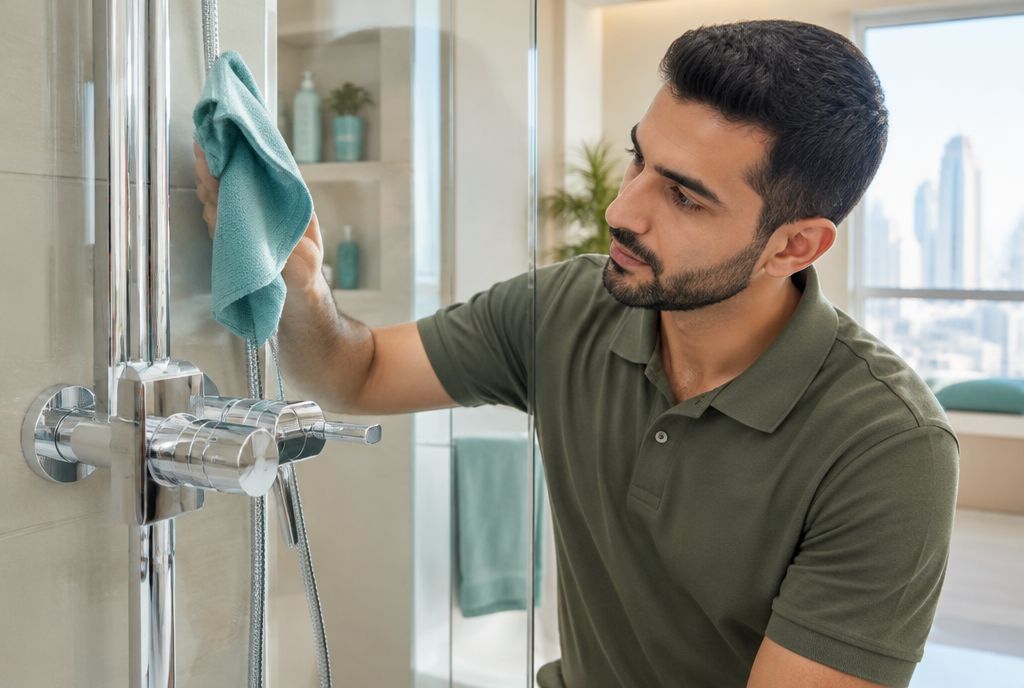
Hard water stains are the white, chalky marks left when water dries and leaves its minerals behind, and in UAE bathrooms they build up quickly on shower glass, taps, shower heads and tiles. Light marks come off with a mild acidic cleaner, such as diluted white vinegar or a citric acid solution, left to soak for a few minutes and then wiped and rinsed. Thick, older deposits need more time, repeated treatments or a professional descale, and natural stone needs a different approach altogether.
What causes hard water stains
Water picks up dissolved minerals, mainly calcium and magnesium. When drops dry on a surface, the water evaporates and the minerals stay behind. Each shower adds another thin layer, and over weeks it hardens into limescale. Heat speeds up evaporation, which is one reason the marks build up fast in UAE bathrooms. Soap residue mixed in makes the film harder to shift.
Where it shows up
- Glass shower screens, as cloudy spots and streaks
- Taps and mixer bases, as white crust
- Shower heads, where blocked nozzles cause uneven spray
- Tiles and grout lines near the shower
- Toilet bowls, as a ring at the waterline
- Kettles, sinks and drainers in the kitchen
How to remove hard water stains
Shower glass
- Spray with diluted white vinegar or a bathroom limescale remover.
- Leave it for several minutes so it can soften the deposits. Don't let it dry on.
- Wipe with a non-scratch sponge, working in small sections.
- Rinse with clean water and dry with a squeegee or microfibre cloth.
For heavy build-up, repeat rather than scrubbing harder. Abrasive pads and powders can scratch glass permanently.
Taps and fittings
Wrap a cloth soaked in diluted vinegar or descaler around the tap and leave it for a while. Use an old toothbrush around the base and the aerator, then rinse and buff dry. Check the manufacturer's care advice first: some finishes, such as brushed or coloured taps, can be damaged by acids.
Shower heads
If it unscrews, soak it in a bowl of diluted vinegar. If not, fill a plastic bag with the solution, secure it around the head and leave it to soak. Rinse by running the shower, and rub any blocked nozzles with your thumb or a soft brush.
Tiles and grout
Apply the cleaner, leave it briefly, then scrub with a grout brush and rinse well. Acids can weaken some grout over time, so rinse thoroughly and don't leave product sitting on grout for long.
Toilet bowls
Use a toilet limescale remover under the rim and at the waterline, leave it for the time on the label, then brush and flush.
Two important cautions. Never mix limescale removers or vinegar with bleach or other cleaners, as this can release harmful gases. And never use vinegar or acidic descalers on marble, travertine or limestone: they etch the surface. Use a pH-neutral cleaner made for natural stone instead.
How to remove limescale that won't shift
If several treatments haven't worked, a few things may be going on:
- The deposit is thick and old. It may need longer contact time and several rounds, which is where professional descaling helps.
- The glass is etched. After years of build-up, minerals can permanently mark glass. Cleaning will improve it, but it may never be completely clear.
- It's not limescale. Dark marks in grout or around sealant may be mould rather than mineral deposits; see how to remove mould from a bathroom.
How to stop hard water stains coming back
- Squeegee the glass after every shower. It takes seconds and is the most effective habit there is.
- Dry taps and fittings with a towel or cloth after use.
- Ventilate with the extractor fan or an open door, so the room dries faster.
- Clean lightly every week, before deposits have time to harden.
- Ask about a water softener or filter if limescale is a constant problem; your building management or a plumber can advise on what suits your supply.
When to get professional help
A professional deep clean is worth it when deposits have built up over months, when you're moving in or out, or when you're not sure what a surface can safely take. A trained team will check the surface first and choose the right product, and tell you honestly if glass or chrome is past cleaning. Descaling is part of a full bathroom clean in a deep clean; see our guide to deep cleaning services in Sharjah for what's included, and our guide to house cleaning services in Sharjah for an overview of a professional visit.
At Tip Top, low-odour, non-toxic products are our standard, safe around children and animals.