
Building care
How Often Should Water Tanks Be Cleaned?
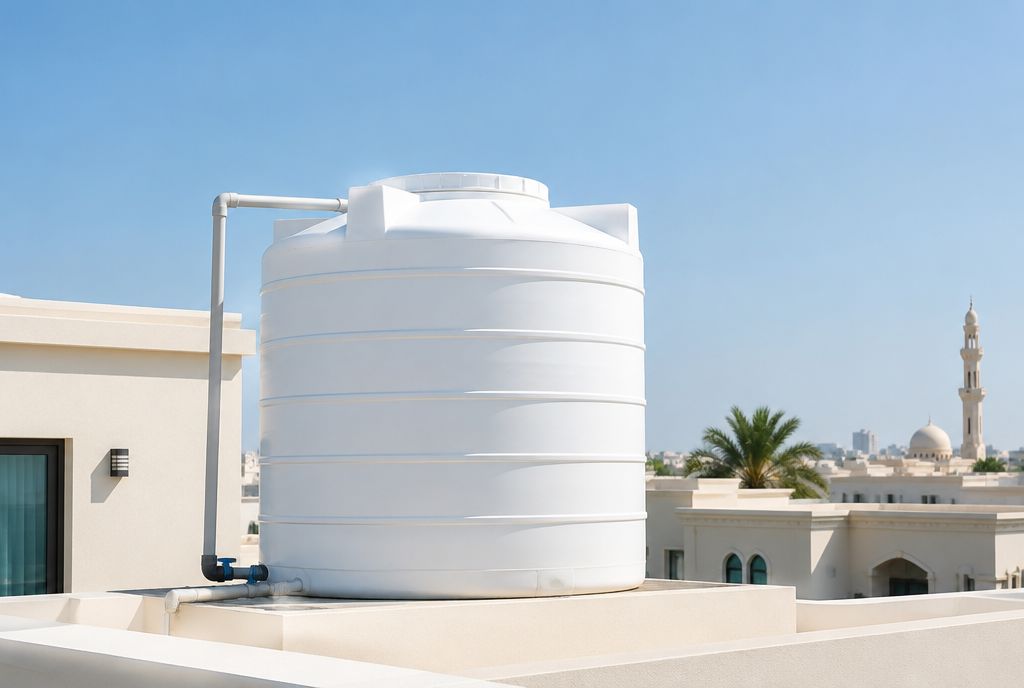
How often should water tanks be cleaned? It depends on the tank: its type and location, the condition of its lid and vents, how much water is used, and whether there's any change in the water. There's no single interval that suits every property. Buildings, communities and authorities may also have their own requirements, so check with your building management or the relevant authority for what applies to you, and clean straight away if the water looks, smells or tastes wrong.
Why there's no one-size-fits-all answer
Two tanks in the same street can need very different care. A sealed, shaded underground tank with a well-fitted lid stays cleaner for longer than an older roof tank in full sun with a cracked cover. Water usage matters too: water that sits for a long time in a tank, such as in a villa left empty over the summer, can lose quality faster than water that's used and replaced every day.
How often should water tanks be cleaned? The key factors
| Factor | Clean more often if… |
|---|---|
| Location | The tank is on the roof in direct sun, or near open sand or construction |
| Lid and seals | The lid is cracked, loose or doesn't lock |
| Vents and overflows | Insect screens are missing or damaged |
| Tank material and age | It's an older tank, or there are signs of rust or a damaged lining |
| Usage | Water sits unused for long periods, or many people share the tank |
| Water quality | You see sediment, discolouration, or notice a smell or taste |
| Recent events | There's been nearby construction, a dust storm, repairs or a supply problem |
When to clean straight away
Whatever your regular routine, don't wait for the next scheduled clean if:
- the water is cloudy, yellow, brown or has particles in it
- there's a musty, earthy or otherwise unusual smell or taste
- you find insects, debris or signs of animals in or around the tank
- the tank lid has been open, broken or missing
- the property has stood empty for a long time
- you've just moved in and don't know when it was last cleaned
- there's been building work that could have let dust into the tank
Water safety first. If your water looks, smells or tastes wrong, stop drinking it and get it checked. Use bottled water for drinking and cooking until the problem is found and fixed, and contact your building management if you live in a shared building.
Requirements for buildings and communities
Some buildings, communities and authorities may have rules or guidance on water tank maintenance, particularly for shared and commercial buildings. These can change, and they may differ depending on the type of property. Rather than relying on general advice, check with your building management, community management or the relevant authority to confirm what applies to your property.
If you're a tenant in an apartment, the shared tanks are usually the building's responsibility, so ask the management when they were last cleaned. In a rented villa, your tenancy agreement should say who arranges it.
Simple checks between cleans
A few quick checks help you spot problems early. Only do the ones you can do safely; don't climb onto roofs or open tanks you can't reach easily.
- Look at the water: fill a clear glass from the kitchen tap now and then and check it in good light.
- Check the taps: grit in tap aerators or shower heads can point to sediment in the tank.
- Check the lid, where it's safely visible, to make sure it's closed and intact.
- Keep the area clear around ground tanks: no standing water, rubbish or plants growing over covers.
- Keep a record of each cleaning date and any issues found.
Fitting tank cleaning into home maintenance
Water tank cleaning is one of several jobs that keep a villa or building in good condition and are easy to forget because they're out of sight. Many owners plan it alongside other exterior work. If you're arranging work on the outside of the building, our guide to facade cleaning for villas and low-rise buildings covers methods and safety, and window cleaning for Sharjah homes explains how to deal with dust and hard-water spots. Inside the home, a regular house cleaning service takes care of the rest.
What a cleaning visit involves
When it's time, a professional service drains the tank, removes sediment, scrubs the internal surfaces, disinfects with a product suitable for drinking-water storage, rinses, inspects the tank and refills it. Our guide to water tank cleaning and disinfection walks through each step. Because tanks are confined spaces, and roof tanks involve working at height, this isn't a DIY job.
Tip Top offers water tank cleaning among our services. The price depends on the number, size and type of tanks, how easy they are to reach and how much build-up there is, and we confirm it after a free on-site or photo-based assessment, before any work starts.