
Pet care
How to Get Rid of Cat Litter Smell in an Apartment
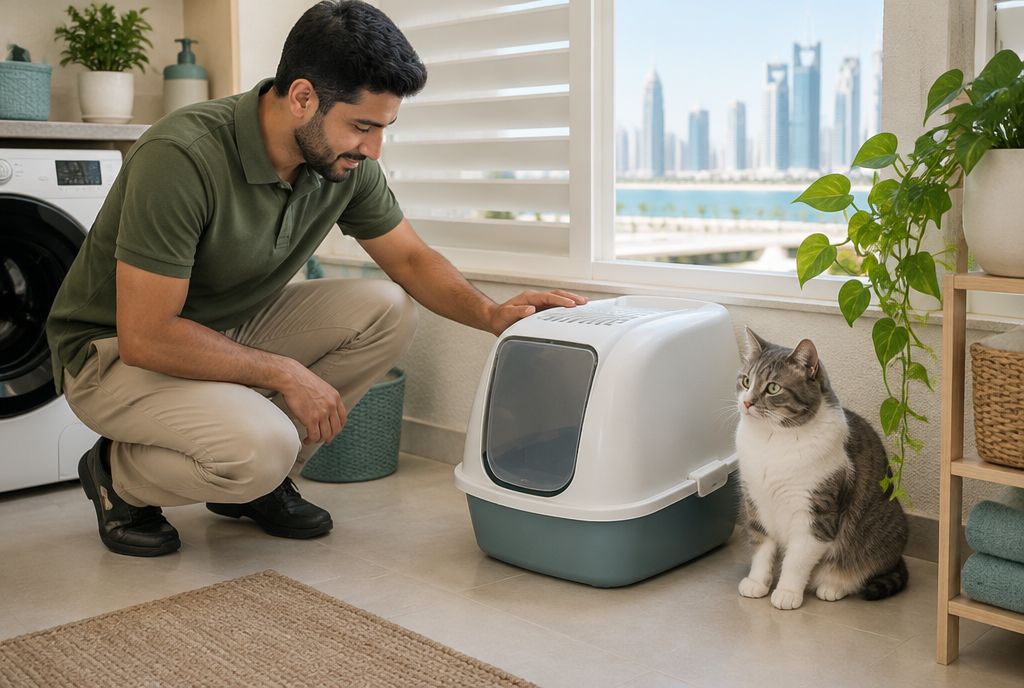
The way to get rid of cat litter smell in an apartment is to remove waste before it builds up, keep the tray itself clean, and put it somewhere with airflow. Scooping at least once a day, changing the litter fully on a regular schedule and washing the tray with mild soap will solve most odour problems. Sprays and scented products only cover the smell, and can put your cat off the tray.
Why litter smells so strong in apartments
- Small spaces. In a studio or one-bedroom flat, there's less air for the smell to disperse into.
- Closed windows. With the AC running most of the year in the UAE, the same air circulates for long periods.
- Heat and humidity. Warm, humid air speeds up the breakdown of urine, which releases ammonia.
- Hidden locations. Trays tucked into a closed cupboard or windowless bathroom trap the smell.
How to get rid of cat litter smell: the daily routine
- Scoop at least once a day, ideally twice. Remove clumps and solids completely, including bits stuck to the sides.
- Top up the litter to keep a consistent depth. Too little litter lets urine pool at the bottom of the tray.
- Seal waste in a bag and take it out of the flat rather than leaving it in a kitchen bin.
- Check the floor around the tray for scattered litter and splashes, and wipe it clean.
The weekly reset
- Change the litter completely on a regular schedule. How often depends on the litter type and how many cats use the tray; non-clumping litter needs changing more often than clumping.
- Wash the tray with warm water and a mild, unscented soap, then rinse and dry fully before refilling.
- Clean the surrounding area: the floor, skirting and wall near the tray.
- Wash mats and liners if you use them.
Skip harsh or scented cleaners. Strong-smelling products can make cats avoid the tray. Avoid ammonia-based cleaners, which smell like urine to a cat, and never mix cleaning products. Keep essential oils, diffusers and scented sprays away from cats, as they can be harmful.
Choosing the right tray and litter
Number of trays
A widely used guideline is one tray per cat, plus one extra. More trays means less waste in each, and less smell overall.
Tray size and type
Choose a tray large enough for your cat to turn around comfortably. Covered trays can hold smells in for you but concentrate them for the cat, and some cats refuse them. If you use one, clean it as often as an open tray.
Replace old trays
Plastic trays get scratched over time, and the scratches hold bacteria and smell. If a clean tray still smells, it's time for a new one.
Litter
Clumping litter makes it easier to remove all the urine each day. Many cats prefer unscented, fine-textured litter. If you change litter type, do it gradually by mixing the new with the old.
Where to put the litter tray in an apartment
- Somewhere with airflow, such as a bathroom with an extractor fan or a utility area, rather than a closed cupboard.
- Away from food and water bowls. Cats don't like to eat near their toilet.
- Quiet but accessible. Avoid busy hallways, but make sure your cat can always reach it.
- Not on a balcony in summer. UAE balconies get very hot, and heat makes the smell worse.
A thin layer of bicarbonate of soda under the litter can help absorb odour, but it's not a substitute for regular scooping.
Dealing with accidents outside the tray
If your cat urinates outside the tray, clean the spot with an enzyme cleaner made for pet urine, which breaks down the residue that keeps cats coming back. Blot, don't rub, and let the area dry completely. For soaked-in smells on sofas or carpets, our guide to removing pet odour from your home explains the next steps.
When the smell is a health sign
A sudden, much stronger urine smell, very frequent trips to the tray, straining, blood in the urine, or a cat that stops using the tray can all be signs of a health problem. See a vet, especially if your cat is straining and producing little or nothing, as that can be an emergency.
Keeping it fresh while you travel
Litter smell builds fast when no one is scooping. If you're away, a sitter should clean the tray at every visit, not just top up food. Our guide on how to choose a pet sitter covers what to ask, and how pet sitting works in Sharjah explains a typical visit. Tip Top's pet sitting includes feeding, fresh water, litter and medication on your schedule, with a photo update after every visit.