
Pet care
Removing Pet Odour From Your Home: Sofas, Carpets and Litter Areas
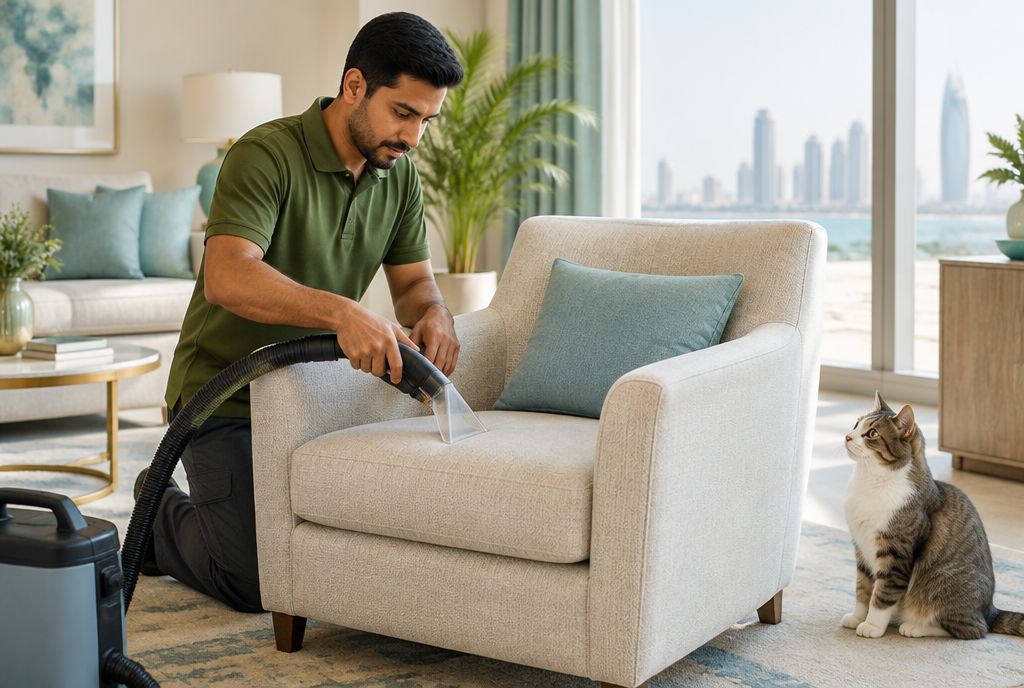
Pet odour in a home usually comes from a few sources: urine that has soaked into sofas, carpets or mattresses, natural oils from your pet's coat on fabric, and litter areas that aren't cleaned often enough. Masking the smell with sprays doesn't work for long. Lasting pet odour removal means finding the source, breaking down the residue, and drying the area properly, which is where professional pet odour removal services can help with deep-set stains.
Where pet odour comes from
- Urine. The main culprit. Even after the surface is dry, residue left in the padding or fibres keeps releasing smell, especially in warm, humid air.
- Coat oils and dander. Pets rub against sofas, cushions and bedding, leaving a "doggy" smell that builds up over time.
- Litter trays and cages. Ammonia from urine builds quickly in small spaces.
- Pet bedding and toys, which are easy to forget.
- Accidents you haven't found, often behind furniture or under rugs.
In the UAE, homes are closed up with the AC running for most of the year. That keeps smells trapped inside, so a small problem can quickly fill a room.
Step one: find the source
Use your nose at pet height, close to the floor and the base of furniture. Look for discoloured patches on carpets and fabric, and check the areas your pet likes most: favourite sofa corners, under beds, behind doors and along walls. A torch held low across the floor in a dark room can make dried stains easier to spot.
Removing pet odour from sofas
- Vacuum the whole sofa, including under and between cushions, to lift hair and dander.
- For a fresh accident, blot (don't rub) with clean, dry cloths to soak up as much as possible.
- Use an enzyme-based cleaner made for pet urine, following the label. Enzymes break down the residue that causes the smell, rather than covering it.
- Test any product on a hidden area first, and check the sofa's care label.
- Let it dry fully, with good airflow. Keep pets off until it's completely dry.
If the smell comes back after drying, the urine has usually reached the foam or padding. At that point a professional deep clean of the upholstery is usually more effective than repeated surface cleaning.
Removing pet odour from carpets and rugs
Carpets hold odour in two layers: the fibres and the backing or underlay beneath. Surface cleaning may lift the stain while leaving residue underneath.
- Blot fresh accidents straight away, working from the outside in.
- Treat the spot with an enzyme cleaner, using enough to reach as deep as the urine went.
- Avoid steam or very hot water on urine before it's treated, as heat can set the stain and smell.
- Dry thoroughly. Damp carpet in a humid climate can develop a musty smell of its own.
Rugs that are used daily by pets benefit from regular professional cleaning, not just spot treatment.
Mattresses and pet beds
If your pet sleeps on your bed or has had an accident on a mattress, treat it quickly: blot, apply an enzyme cleaner suitable for the fabric, and dry it fully before putting bedding back on. For the method in detail, see how to clean urine from a mattress. Wash your pet's own bed and blankets regularly on the hottest setting the label allows.
Litter areas and cages
- Scoop litter at least daily and do a full change and wash of the tray regularly.
- Wash cages and hutches with a mild, pet-safe cleaner and rinse well.
- Put trays and cages where there's some airflow, not in a closed cupboard.
- Clean the floor and wall around the tray, where urine often splashes.
Avoid ammonia-based cleaners on pet accidents. Urine contains ammonia, and the smell can encourage pets to mark the same spot again. Never mix cleaning products; some combinations release harmful fumes.
Keeping odour down day to day
- Groom regularly. A clean, brushed coat leaves less oil and loose hair on furniture. Our guide to dog grooming at home explains what a full groom covers, and cats benefit too; see cat grooming at home.
- Vacuum often, especially soft furnishings and edges where hair collects.
- Wash throws and cushion covers that pets lie on.
- Air the home when the weather allows, and keep AC filters clean, since they collect hair and dander.
- Watch for changes. A pet that suddenly starts having accidents may have a health problem, so see your vet.
When to call in professional pet odour removal
Call in help when a smell returns after cleaning, when you're moving out and need the home handed back fresh, or when there are several affected items. At Tip Top, sofa, mattress, carpet and pet-odour treatment are priced per item, and we use low-odour, non-toxic products as standard that are safe around children and animals. The final price is confirmed after a quick assessment.