
Building care
Water Tank Cleaning in Sharjah: What Villa and Building Owners Should Know
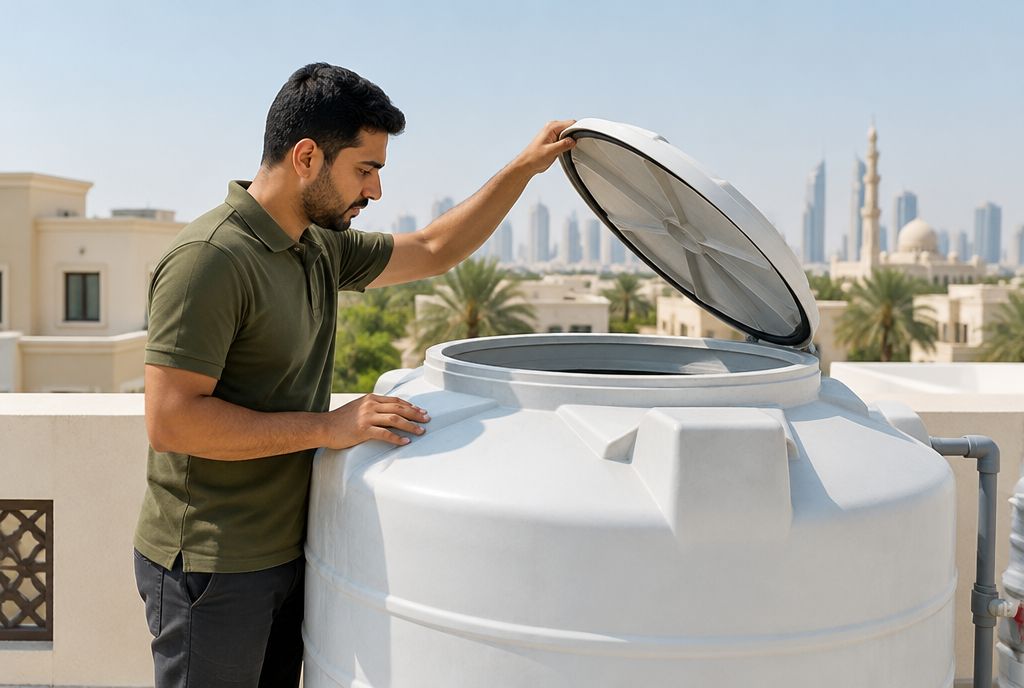
Most villas and buildings in Sharjah store their water in roof or ground tanks before it reaches the taps, and those tanks need regular cleaning. Over time, sediment, fine sand and biofilm build up inside, and the heat makes conditions inside a tank warmer than many people expect. Water tank cleaning in Sharjah means draining the tank, removing that build-up, disinfecting the surfaces and checking the tank for damage, so the water you use at home is stored in a clean container.
How water storage works in Sharjah homes
Many properties don't draw water straight from the mains to the tap. Instead, water is stored and then pumped or gravity-fed around the building. Common set-ups include:
- Roof tanks on villas and low-rise buildings, often plastic, fibreglass or steel
- Underground or ground-level tanks, usually concrete or GRP, common in larger villas and apartment buildings
- Both: a ground tank that fills a smaller roof tank via a pump
In a villa, the tanks normally belong to the owner, so the owner (or the tenant, depending on the tenancy agreement) arranges their cleaning. In an apartment building, the tanks are shared and are usually the responsibility of the building owner or management, not individual residents.
Why tanks need cleaning
Even when the water supplied to a building is clean, a storage tank can affect its quality over time:
- Sediment settles on the floor of the tank, including sand and rust particles.
- Biofilm, a slimy layer, can form on walls and pipes, especially in warm conditions.
- Dust and debris get in through badly fitted lids, damaged vents or overflow pipes.
- Insects and small animals can enter if covers or screens are missing or broken.
- Heat: tanks exposed to the sun can get very warm, which encourages growth inside.
If your water looks, smells or tastes wrong, for example cloudy, discoloured, with a musty or unusual smell, or with particles in it, stop drinking it and get it checked. Use bottled water in the meantime and contact your building management or a water specialist.
Signs your water tank needs attention
- Cloudy, yellow or brown water from the taps
- Sand, grit or flakes in sinks, kettles or showers
- A musty, earthy or unusual smell when you run the tap
- Stained sanitary ware or clogged tap aerators and shower heads
- A tank lid that's cracked, missing or doesn't seal
- You've just moved in and don't know when it was last cleaned
What water tank cleaning in Sharjah involves
The basic process is drain, clean, disinfect, rinse and refill, with an inspection along the way. Our guide to water tank cleaning and disinfection goes through each step in detail. In short, a good service should:
- Arrange the timing so you're without water for as short a time as possible
- Drain the tank and remove sediment and sludge
- Scrub the walls, floor and lid to remove biofilm and stains
- Disinfect with a product suitable for drinking-water tanks, then rinse thoroughly
- Inspect for cracks, leaks, rust and damaged fittings, and report any issues
- Refill and check that the water runs clear at the taps
How often should tanks be cleaned?
There's no single answer for every property. It depends on the tank's type, size and location, the condition of the lid and vents, how much water you use, and whether you notice any change in water quality. Some buildings, communities and authorities may have their own requirements. Check with your building management or the relevant authority for what applies to your property. Our article on how often water tanks should be cleaned covers the factors in more depth.
What villa and building owners should check
For villa owners
- Find out where your tanks are, how many there are, and how to reach them safely.
- Check lids, vents and overflow pipes for gaps that let in dust and insects.
- Keep the area around ground tanks clear and free of standing water.
- Keep a simple record of when the tanks were cleaned and by whom.
- If you rent, check your tenancy agreement to see who is responsible.
For building owners and managers
- Plan cleaning to minimise disruption, and give residents advance notice of any water shutdown.
- Make sure tank rooms and roof access are safe and secured.
- Keep cleaning records available for residents and for any inspections.
- Check with the relevant authority for any requirements that apply to your building.
Safety: why tank cleaning isn't a DIY job
Entering a water tank is entering a confined space. Air inside can be poor, surfaces are slippery, and disinfectants need careful handling. Roof tanks add the risk of working at height. For these reasons, tank cleaning should be done by a trained team with the right equipment, not by a homeowner with a bucket.
What affects the cost
Water tank cleaning is priced for the specific property. The main factors are:
- the number of tanks, their size and material
- where they are (roof, ground or underground) and how easy they are to reach
- the amount of sediment and build-up
- any repairs or extra work needed after inspection
Tip Top offers water tank cleaning among our services, and we confirm the price after a free on-site or photo-based assessment, before any work starts. If you're also thinking about cleaning and sanitising inside the home, see our guide to home disinfection and sanitisation in Sharjah.