
Pest control
Cockroach Control in Sharjah Apartments: What Works and What Doesn't
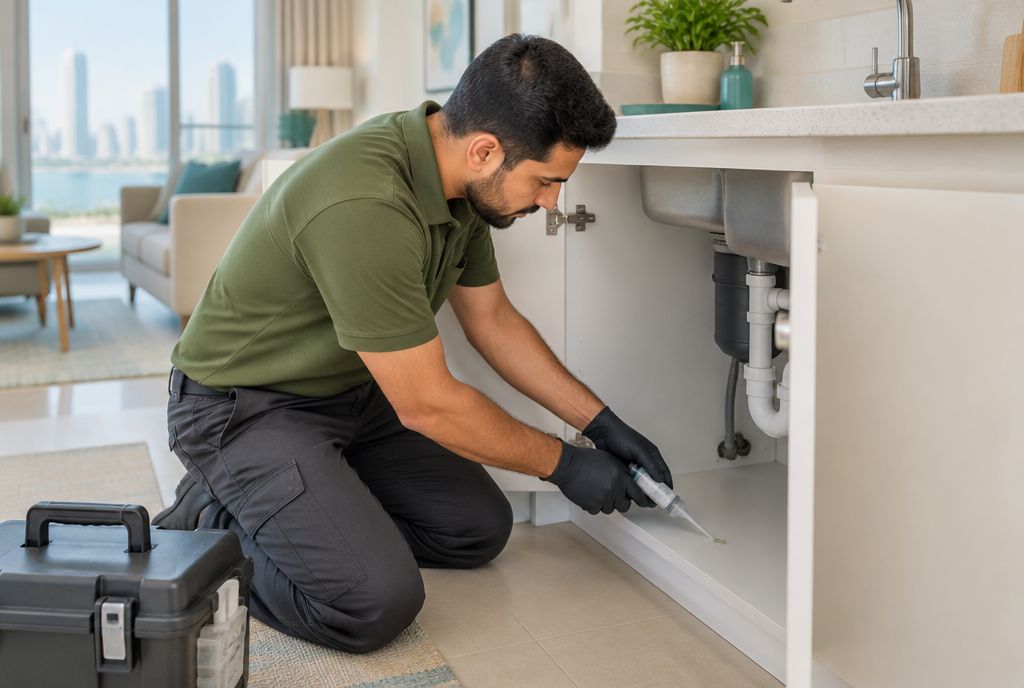
Cockroach control in Sharjah apartments works when the treatment reaches where cockroaches hide and breed, and when the food, water and gaps that keep them there are dealt with at the same time. Spraying the ones you can see rarely works on its own. Here's what tends to work, what usually doesn't, and what to expect from professional cockroach pest control.
Why apartments are hard to keep cockroach-free
In an apartment building, your flat is connected to every other flat by shared drains, pipe risers, cable ducts and rubbish chutes. Cockroaches use these to move around, so a clean home can still get them from a neighbour. They need three things: warmth, moisture and food. Sharjah apartments supply all three, especially in kitchens and bathrooms, where pipes run behind cabinets and the space under the sink stays damp.
The two kinds most people notice are the small, light-brown cockroaches that live inside kitchens (usually German cockroaches, covered in detail in why German cockroaches keep coming back) and the larger, darker ones that tend to come up from drains and service areas. Treatment differs, so it helps to know which one you have.
What doesn't work (or not for long)
- Spraying the cockroaches you see. The ones out in the open are a small part of the population. The rest are inside hinges, behind the fridge, under the oven and in wall voids.
- Bug bombs and foggers. They fill the room but don't get deep into cracks, and they can push cockroaches further into walls or into the flat next door. They also leave residue on every surface.
- Mixing or layering products. Using several sprays together doesn't make them stronger and can be dangerous. Never mix chemical products.
- Treating once and stopping. Eggs are protected inside a case, so new cockroaches can hatch after a single treatment.
- Treating without cleaning. Bait competes with food. If there's grease behind the cooker and crumbs in the cutlery drawer, cockroaches have no reason to take the bait.
What does work for cockroach control
Treating the hiding places
Professional cockroach control focuses on where cockroaches shelter: cabinet hinges and corners, the gaps around the sink and pipes, behind and under appliances, inside the motor area of the fridge, around the dishwasher, and the space behind skirting and kick boards. Baits and targeted treatments placed in these spots reach the population where it lives.
Following up
Most established cockroach problems need a follow-up visit to deal with insects that hatch after the first treatment. Ask how many visits your problem is likely to need and whether they're included in the quote.
Cutting off food and water
- Store dry food, rice, flour and pet food in sealed containers.
- Don't leave dishes in the sink overnight, and wipe the hob and counters every evening.
- Fix dripping taps and dry the area under the sink.
- Empty the kitchen bin daily and keep it closed.
- Don't leave pet food bowls out overnight.
Blocking the routes in
- Keep drain covers in place in bathrooms and on the balcony, and run water in rarely used drains so the trap doesn't dry out.
- Ask building maintenance to seal gaps around pipes where they enter the kitchen and bathrooms.
- Check the seal under the front door if it opens onto a service corridor.
What to expect from a professional treatment
- Inspection. The technician looks for droppings (small dark specks), egg cases, shed skins and live insects to find where they're concentrated. Larger droppings or gnawed packaging point to a different problem; see signs of rats and what professionals do.
- Preparation. You'll usually be asked to clear kitchen cupboards that need treating, especially under the sink, and put food away.
- Treatment of hiding places and entry points, using a method suited to the type of cockroach and the size of the problem.
- Aftercare instructions: when it's safe to use the kitchen, what to clean and what to leave untouched so the treatment keeps working.
- Follow-up, where needed.
It's normal to see more cockroaches for a short while after treatment, as they're flushed out of hiding. That usually settles, but tell the provider if it doesn't.
Children and pets: before treatment, ask what will be used, where baits will be placed, and how to keep little hands and paws away from them. Our guide on whether pest control is safe for pets and children covers the questions to ask.
Talk to your building
If cockroaches are coming from shared drains or neighbouring flats, treating your apartment alone may only hold them back for a while. Tell your building management or landlord. A building-wide treatment of shared areas, chutes and service ducts gives each flat's treatment a much better chance. For general guidance on how pest control works and how to prepare, see the pest control guide for Sharjah homes.
Cleaning after cockroach treatment
Once the treatment has had time to work and the technician has said it's safe, a deep clean of the kitchen removes dead insects, droppings and egg cases, and the grease and crumbs that drew them in. Clean food-preparation surfaces before use, but ask before washing inside treated cabinets or wiping where baits were placed. Tip Top offers both pest control and deep cleaning, with the pest control price confirmed after a free assessment.