
Upholstery
How to Get Pet Urine Out of a Mattress
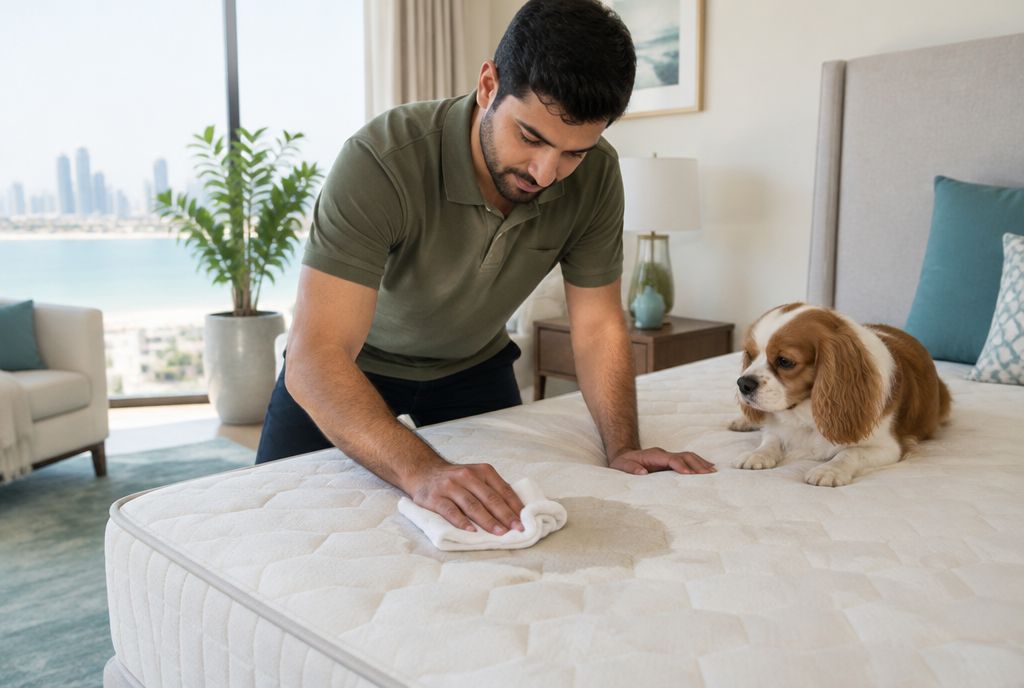
To get pet urine out of a mattress, strip the bed, blot up as much liquid as you can, treat the area with an enzyme-based cleaner made for pet urine, then dry it thoroughly and finish with bicarbonate of soda once it's completely dry. Speed matters: the sooner you act, the less urine soaks into the foam, and the better your chance of removing both the stain and the smell.
Why pet urine is hard to remove
Urine soaks straight through the cover into the padding and foam underneath. As it dries, it leaves behind residues that keep giving off an ammonia-like smell, which often gets stronger on humid days, something many Sharjah households notice. Surface cleaning can make the cover look clean while the smell lingers below. And if a dog or cat can still smell their urine, they're more likely to go in the same spot again.
What you'll need
- Clean, plain white towels or cloths (coloured ones can transfer dye)
- An enzyme-based cleaner made for pet urine on fabric
- Cool or lukewarm water and a spray bottle
- Bicarbonate of soda
- A vacuum with an upholstery attachment
- A fan, and the AC
- Gloves
Keep it simple and safe. Use one product at a time and never mix cleaning products. Patch-test any cleaner on a hidden part of the mattress first, and check the mattress manufacturer's care instructions, as some covers and foams have specific limits.
Step by step: fresh urine
- Strip the bed straight away. Remove sheets, the mattress protector and any blankets, and wash them following their care labels.
- Blot, don't rub. Press clean towels firmly onto the wet area to soak up as much urine as possible. Swap to dry towels and keep going until very little comes up. Rubbing spreads the urine and pushes it deeper.
- Apply an enzyme cleaner. Follow the product's instructions. These cleaners are designed to break down the components of urine that cause the smell, rather than covering it up. Apply enough to reach as far as the urine did, but avoid soaking the mattress more than necessary.
- Leave it to work. Enzyme cleaners usually need time; check the label for how long.
- Blot again to remove excess moisture.
- Dry thoroughly. Run the AC, point a fan at the area, and if you can, stand the mattress on its side so air can reach both faces. Don't make the bed until it's completely dry.
- Finish with bicarbonate of soda. Once the mattress is fully dry, sprinkle bicarbonate of soda over the area, leave it for several hours, then vacuum thoroughly. It helps absorb remaining odour.
Dried or old urine stains
Old stains are harder, but it's still worth trying. Lightly mist the area with plain water to rehydrate the residue, blot, then follow the enzyme-cleaner steps above. You may need to repeat the treatment once or twice, letting the mattress dry fully between attempts. Some yellow staining may lighten rather than disappear, especially if it has been there for a long time.
If the smell is still there after a couple of careful attempts, the urine has probably reached deep into the core. That's the point where professional extraction with odour treatment can help, as it reaches further than home methods. Our guide to professional mattress cleaning explains what's involved.
Cleaning a mattress after bedwetting
The same method works for children's bedwetting accidents: strip, blot, treat with an enzyme cleaner, dry fully and finish with bicarbonate of soda once dry. A waterproof, breathable mattress protector makes future accidents much easier to deal with, and keeping a spare one means the bed can be remade straight away. If bedwetting is frequent or worrying you, have a chat with your doctor.
Other mattress stains
- Sweat and yellow marks: blot with a cloth dampened in a little lukewarm water and a few drops of mild washing-up liquid, rinse by blotting with plain water, then dry well.
- Blood: always use cold water, never hot, as heat sets protein stains. Blot gently.
- Vomit: remove solids, then treat with an enzyme cleaner as for urine.
What to avoid
- Soaking the mattress. Excess water takes a long time to dry, especially in humid weather, and can lead to mould and musty smells.
- Steam or high heat on urine. Heat can set the stain and odour.
- Strong-smelling products and perfumed sprays. They mask the smell for you, but not for your pet.
- Mixing products of any kind.
Stop it happening again
- Use a waterproof protector on any bed a pet sleeps on.
- Treat accidents fast, so the smell doesn't encourage repeat visits.
- Check in with your vet if a house-trained pet starts urinating on beds or furniture. It can be linked to a health issue, stress or a change in routine, and a vet can help work out which.
- Keep the bedroom door closed while you retrain, and give pets their own comfortable bed.
- Keep litter trays clean for cats; many cats avoid a dirty tray.
When to call a professional
If the smell keeps coming back, there are several old stains, or the accident also reached a sofa or rug, a professional clean saves a lot of frustration. Pet urine on upholstery and carpets is treated in a similar way; see sofa cleaning in Sharjah and carpet cleaning in Sharjah. At Tip Top, mattress cleaning and pet-odour treatment are each priced per item, and we confirm the price after a quick assessment.