
Upholstery
Carpet Cleaning in Sharjah: Shampoo, Steam or Dry Extraction?
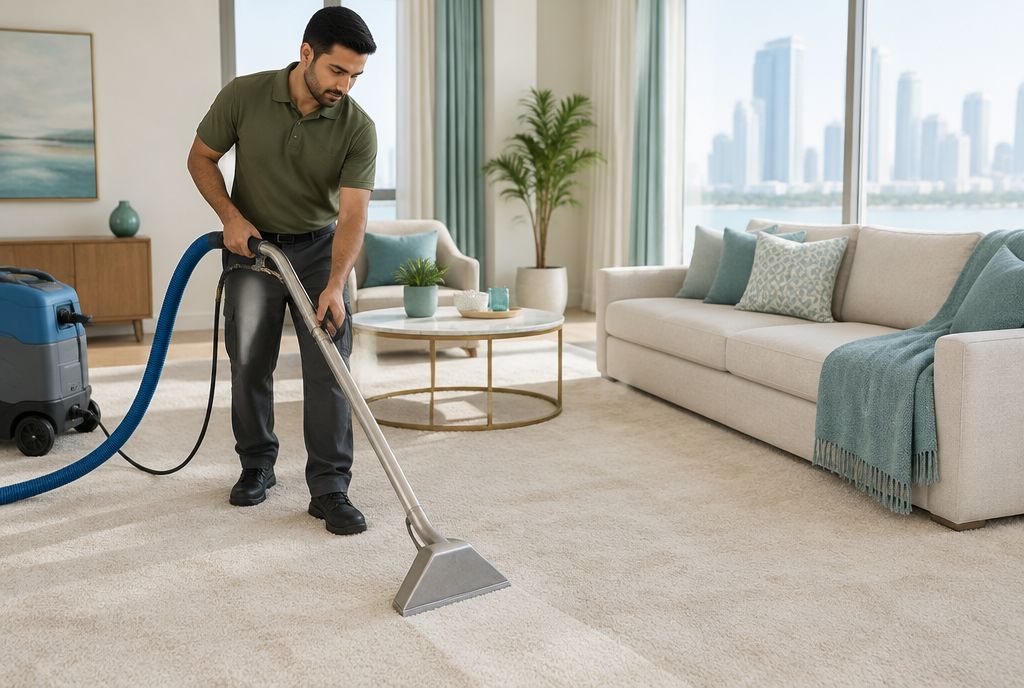
For most carpets in Sharjah homes, deep extraction (usually called steam cleaning) gives the most thorough result, shampooing suits heavily soiled synthetic carpets when it's followed by proper rinsing, and dry or low-moisture cleaning is the safer choice for delicate rugs and for rooms that need to be used again quickly. The right method depends on the fibre, the construction of the carpet and how dirty it is.
Why carpets in Sharjah need regular cleaning
Carpets work like a large filter. Fine dust and sand blown in from outside, hair, skin flakes and crumbs all sink into the pile, where a vacuum only reaches part of it. In the UAE, where AC runs for most of the year and windows stay closed, that dust keeps circulating. Over time carpets look flat and grey along walkways, smell stale and can make allergies worse.
Area rugs on tiled or marble floors, which are common in Sharjah apartments and villas, get the same build-up, plus grit underneath that can scratch the floor.
The three main carpet cleaning methods
Deep extraction (steam cleaning)
Despite the name, this isn't pure steam. Warm water mixed with a cleaning solution is sprayed into the pile and immediately extracted with strong suction, pulling dirt out of the fibres. It's the most thorough option for most wall-to-wall carpets and durable synthetic rugs. The trade-off is drying time, as the carpet is left damp.
Shampooing
A foaming shampoo is worked into the carpet with a rotary brush to loosen embedded dirt, then the residue is extracted or vacuumed out once dry. It can lift heavy soiling well. The risk is residue: if the shampoo isn't rinsed out properly, the sticky film left behind attracts dirt and the carpet gets dirty again faster. We compare the two in more detail in carpet shampooing vs steam cleaning.
Dry and low-moisture cleaning
A cleaning compound, powder or very lightly dampened pad absorbs dirt from the surface fibres, then it's vacuumed away. It dries quickly and is gentler on fibres that don't like water, such as some wool, silk and viscose rugs. It's less effective on deep, ground-in dirt, so it's often used for maintenance or delicate pieces.
| Method | Best for | Watch out for |
|---|---|---|
| Deep extraction | Wall-to-wall carpet, synthetic rugs, deep dirt and allergens | Longer drying time; not for water-sensitive fibres |
| Shampooing | Heavily soiled, durable synthetic carpet | Residue if not rinsed out properly |
| Dry / low-moisture | Delicate rugs, quick turnaround, maintenance cleans | Less effective on deep, old soiling |
Matching the method to your carpet
- Synthetic carpets and rugs (polypropylene, nylon, polyester) usually handle extraction well.
- Wool can be cleaned wet, but needs the right temperature and a wool-safe solution to avoid shrinkage and colour run.
- Silk, viscose and "art silk" rugs are delicate and can be damaged by too much water or scrubbing. They need low-moisture methods and a careful hand.
- Hand-knotted and antique rugs may have dyes that bleed. A colour test on a hidden corner should come first.
Check the label on the back of the rug if there is one, and tell the cleaner what you know about where it came from. Sofas and chairs follow similar rules, explained in our guide to upholstery cleaning and fabric codes.
Test first. Whatever the method, a good technician tests the solution on a hidden area before cleaning the whole carpet, especially on rugs with strong colours.
What happens during a professional carpet clean
- Inspection of fibre, construction, stains and high-traffic areas.
- Thorough dry vacuuming to remove grit and sand before any liquid goes on.
- Pre-treatment of stains and walkways.
- The main clean, using the method chosen for the carpet.
- Grooming the pile so it dries evenly and stands up.
- Advice on drying and when the room can be used.
Drying time is one of the most common questions. It depends on the method, the thickness of the pile and the airflow in the room; our guide on how long carpets take to dry covers it in detail.
Pet stains and odours
Urine soaks through the pile into the backing and, in wall-to-wall carpet, sometimes into the underlay. Cleaning only the surface often leaves a smell that returns on humid days. Effective treatment works deeper and uses products designed to break down the source of the odour rather than mask it. If your pet is having repeated accidents indoors, it's worth asking your vet, as it can be a sign of a health issue.
Carpet cleaning prices in Sharjah
Carpet cleaning is usually priced either by area for wall-to-wall carpet or per piece for rugs. The main factors are size, fibre, how soiled it is, the number and type of stains, and whether pet-odour treatment is needed. At Tip Top, carpets are priced per item, and we confirm the price after a quick on-site or photo-based assessment so you know the cost before work starts.
Keeping carpets cleaner for longer
- Vacuum high-traffic areas several times a week, and slowly, so the vacuum has time to lift sand.
- Use doormats inside and outside entrances, and a shoes-off rule if it suits your home.
- Blot spills straight away with a clean white cloth. Don't rub.
- Rotate rugs every few months so they wear and fade evenly.
- Book carpets alongside sofa, mattress and on-site curtain cleaning so everything soft in the room is done at once.