
Upholstery
Sofa Cleaning in Sharjah: Methods, Drying Times and What to Expect
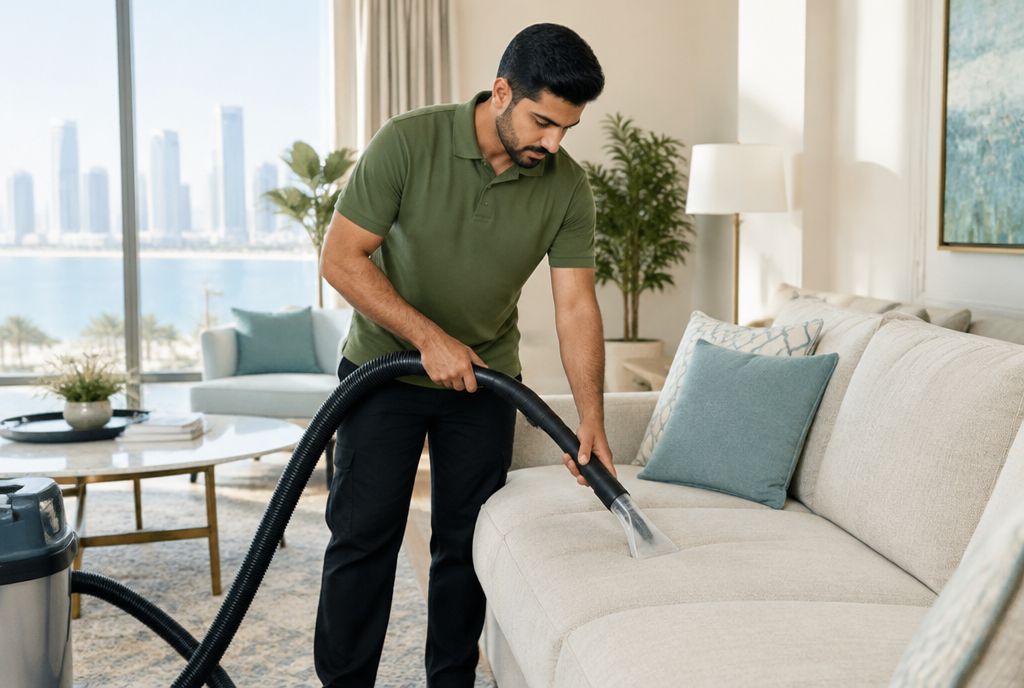
Professional sofa cleaning in Sharjah usually means one of a few methods: deep extraction for most fabric sofas, low-moisture cleaning for delicate fabrics, and a gentle clean and condition for leather. A good visit starts with an inspection, ends with a sofa that is slightly damp rather than wet, and leaves you with a clear idea of when it will be ready to use.
Why sofas in Sharjah get dirty so quickly
A sofa is the most-used piece of furniture in most homes, and the local climate adds to the wear. Fine dust and sand find their way into apartments and villas even with the windows shut, and settle deep into fabric. Body oils and sweat build up on the arms, headrests and seat cushions, especially through the long summer. In family and pet homes, add food, drinks, hair and the occasional accident.
Most of this can't be seen at first. It shows up later as a dull, greyish look, darker patches where people sit and a stale smell when the AC has been off for a while.
The main sofa cleaning methods
Deep extraction (often called steam cleaning)
A cleaning solution is worked into the fabric and then pulled back out with a powerful extraction machine, taking the loosened dirt with it. This is the standard method for most durable fabric sofas because it reaches below the surface rather than just freshening the top layer.
Low-moisture cleaning
Some fabrics, such as velvet, viscose blends and certain natural fibres, can water-mark, shrink or lose their pile if they get too wet. For these, a technician uses much less water and a gentler solution, often with a brush or pad, so the fabric dries quickly and keeps its texture.
Leather cleaning and conditioning
Leather should never be soaked. It is cleaned with a product made for leather, wiped down and then conditioned so it doesn't dry out and crack, which matters in a home where the AC runs most of the year.
The right choice depends on the fabric, not on what's quickest. If you want to understand the labels on your sofa, our guide to upholstery fabric codes and cleaning methods explains them.
What to expect on the day
- Inspection. The technician checks the fabric, the care label and any stains, and tells you honestly what is likely to come out and what may only fade.
- Dry vacuuming. Dust, sand, crumbs and hair are removed first, including down the sides and under the cushions. Skipping this step turns dust into mud.
- Pre-treatment. Stains and heavily soiled areas such as arms and headrests are treated with a product matched to the type of mark.
- Main clean. Extraction, low-moisture cleaning or leather care, depending on the sofa.
- Grooming and drying. The fabric is brushed so the pile dries evenly, and cushions are stood up or spaced out to let air circulate.
Before the team arrives: clear the sofa and the area around it, remove throws and loose cushions you'd rather wash yourself, and tell the team about any stains you've already tried to treat and what you used.
Sofa drying times
Drying time depends on the method, the fabric, the thickness of the cushions and the room's airflow. A low-moisture clean dries faster than a full extraction clean, and a thin fabric sofa dries faster than one with deep foam cushions. Ask the team for the expected drying time for your sofa before they start.
To help it dry:
- Keep the AC running and, if you can, use a fan to move air across the fabric.
- Avoid sitting on it until it is dry to the touch, so the pile doesn't flatten or pick up new dirt.
- Keep pets off it until it is completely dry.
- Don't put cushions back in direct sunlight to speed things up, as strong sun can fade some fabrics.
- Book in the morning so the sofa has the whole day before evening use.
Stains, odours and pet homes
Fresh stains are much easier to deal with than old ones. Food, drink and mud usually lift well. Ink, dye transfer from clothing and stains that have been "fixed" with the wrong home product are harder, and may only lighten.
Pet urine needs special attention. If only the surface is cleaned, the smell can return once the fabric dries, because the urine has soaked into the cushion foam. Odour treatment works further into the cushion, and in some cases the cushion insert may need to be dealt with separately. Tip Top cleans pet homes and prices pet-odour treatment per item.
How often should you have a sofa professionally cleaned?
There is no fixed rule. A lightly used sofa in a home without children or pets may only need it occasionally, while a family sofa that is used every day, or one shared with a dog or cat, benefits from more regular cleaning. Signs it's due include a visible line between the cushions and the back, dark arms and headrests, a smell that comes back after airing, and allergy symptoms that get worse when you sit on it.
Between visits, vacuum the sofa weekly with an upholstery attachment and blot spills straight away. Many people also book sofa cleaning at the same time as carpet cleaning, mattress cleaning or on-site curtain cleaning, since the same kind of equipment is used for all of them.
Choosing a sofa cleaning service in Sharjah
- Ask what method they'll use and why. A good cleaner explains how they chose it for your fabric.
- Ask about drying time before they start.
- Check the products if you have children, pets or anyone with sensitive skin.
- Get the price confirmed upfront. Sofa cleaning is usually priced per seat or per piece, depending on size and condition.
At Tip Top, sofa cleaning is priced per item, our teams use low-odour, non-toxic products as standard, and we confirm the price after a quick on-site or photo-based assessment.