
Home cleaning
How to Reduce Dust in Your House After a Sandstorm
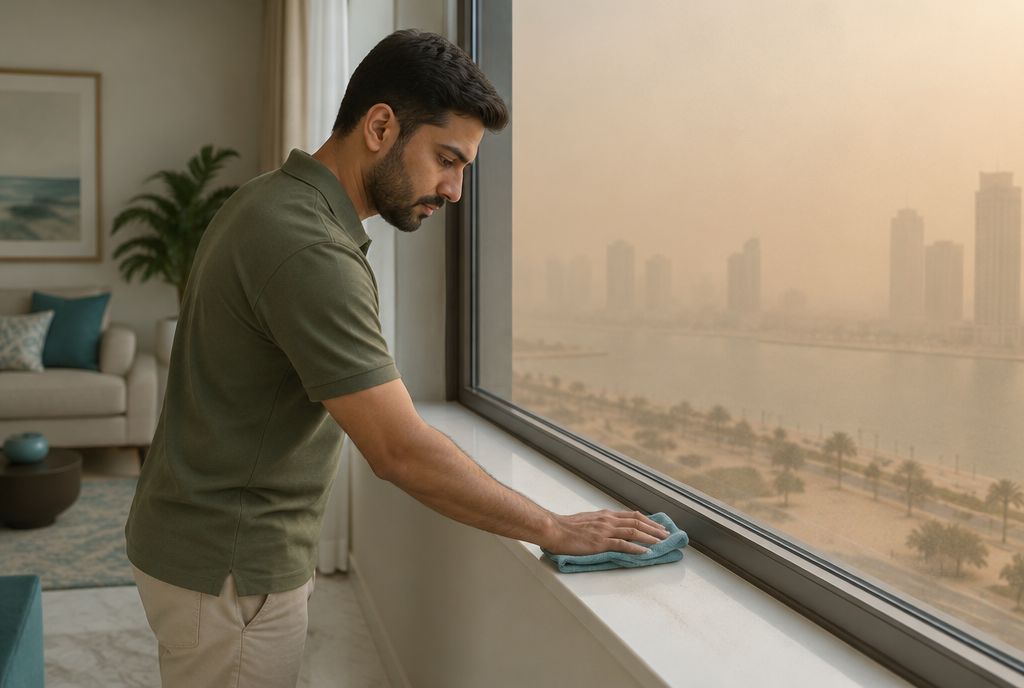
To reduce dust in your house after a sandstorm, keep windows and doors shut until the air clears, then clean from the top down with damp microfibre cloths and a vacuum with a fine filter, finishing with the floors. Don't forget AC filters, window tracks and balcony doors, where the finest sand settles. With a few changes to your routine, you can also cut down how much dust comes back in between storms.
During the sandstorm
- Close windows and balcony doors and keep them shut until visibility improves.
- Roll a towel along gaps under doors or along window frames that let dust through.
- Keep the AC running on recirculate, if your system has that setting, rather than drawing in outside air.
- Bring in balcony cushions, laundry and pet bowls, which collect dust quickly.
- Hold off cleaning until the storm has passed. Dust keeps settling for some time afterwards.
Health first: fine dust can irritate the airways. If anyone at home has asthma, allergies or a breathing condition and symptoms flare up, follow the advice of their doctor and see a doctor if symptoms are severe or don't settle.
How to reduce dust in the house after a storm
Wait until the air outside has cleared, then work through the home in this order.
1. Start high
Dust ceiling corners, light fittings, ceiling fans, curtain rails, wardrobe tops and AC grilles first. Anything you knock down will land on surfaces you haven't cleaned yet.
2. Wipe, don't flick
Use a slightly damp microfibre cloth rather than a feather duster or dry cloth. Fine sand sticks to a damp cloth instead of going back into the air. Rinse the cloth often.
3. Clean the AC filters
Filters catch a lot of dust during a storm. Wash or replace them according to the manufacturer's instructions, and make sure they're fully dry before refitting. Wipe the grilles and vents too.
4. Clear window and door tracks
Sliding door and window tracks fill with sand. Vacuum them with a narrow nozzle first, then wipe with a damp cloth. Doing this before mopping stops sand being dragged across the floor.
5. Soft furnishings
Vacuum sofas, cushions, rugs and mattresses with an upholstery attachment. Shake out or wash throws, cushion covers and bed linen. Curtains hold a surprising amount of dust; vacuum them or arrange cleaning if they look dull.
6. Floors last
Vacuum first, using a machine with a fine filter if you have one, then mop. Sweeping with a broom alone tends to push fine dust back into the air.
7. The balcony
Sweep, then wash the balcony floor and wipe railings and glass. Leaving it means the dust blows back in the next time the door opens.
Where dust hides
- The tops of door frames and wardrobes
- Behind and under the TV, sofa and beds
- Skirting boards and the edges of rugs
- Inside open shelves and on books
- Light switches, which get dusty and then grubby from fingers
- Bathroom extractor grilles
- Kitchen cabinet tops, where dust mixes with grease
Keeping dust down day to day
- Mats inside and outside every entrance, including the balcony door.
- Shoes off at the door.
- Check seals on windows and balcony doors. Worn rubber seals let in a steady stream of fine sand; ask your landlord or maintenance team about replacing them.
- Clean AC filters regularly, more often in dusty months.
- Reduce clutter on open surfaces. Fewer objects mean faster dusting.
- Wash bedding weekly in a home with lots of dust or pets.
- Consider an air purifier with a suitable filter for bedrooms, if dust is a constant problem.
Put these into your routine with our daily, weekly and monthly house cleaning checklist.
When dust keeps coming back
If surfaces are dusty again within a day of cleaning, the source may be inside the home rather than outside:
- AC ducts that have collected dust over months can blow it back into every room. Dark marks around ceiling vents are a common sign.
- Old carpets and soft furnishings release dust when walked on or sat on.
- Recent renovation, even next door, leaves fine dust in the system.
In these cases a deep clean, and an AC duct and coil clean if the ducts are the cause, gets rid of the reservoir so day-to-day cleaning can keep up.
Other bathroom and wet-area problems after dusty weather
Dust sticks to damp surfaces, so bathrooms and kitchens can look grubby quickly after a storm. Dust and limescale together dull glass and taps; see our guide to hard water stains. In bathrooms without good ventilation, dust on grout can also feed mould, which our guide on how to remove mould from a bathroom covers. For a full reset, see our guide to house cleaning services in Sharjah.