
Pet care
Pet-Safe Cleaning Products: What to Use in a Home With Dogs and Cats
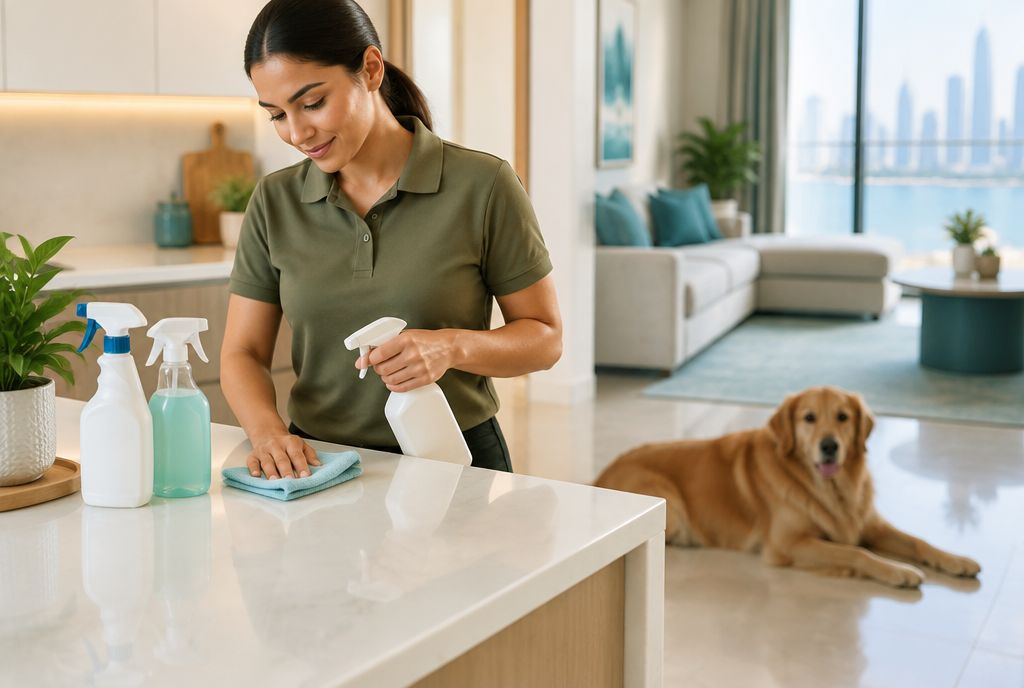
Pet safe cleaning products are ones that clean effectively without leaving harmful residue, fumes or strong scents that dogs and cats can breathe in, lick off their paws or absorb through their skin. In practice, that means choosing mild, low-odour products, using them as directed, rinsing surfaces pets touch, and keeping animals away until floors and fabrics are dry. How you use a product matters as much as what's in the bottle.
Why pets are more exposed than people
- They live close to the floor, where cleaning residue settles.
- They lick their paws and fur, swallowing whatever they've walked through.
- They have sensitive noses and airways, so strong fumes and fragrances can bother them.
- Cats are especially sensitive. Their bodies process some chemicals less well than dogs' or people's, so products that are fine around a dog may not be fine around a cat.
In UAE homes, windows are usually shut and the AC is running for much of the year, so fumes and fragrances linger indoors longer.
What to look for in pet-safe cleaning products
- Clear labels. Choose products that list their ingredients and give clear instructions, including dilution and whether rinsing is needed.
- Low odour and fragrance-free where possible. Strong scent isn't a sign of cleanliness.
- Mild, general-purpose cleaners for everyday surfaces, used at the recommended dilution.
- Enzyme cleaners for urine, vomit and other organic stains. They break down the cause of the smell rather than covering it.
- Warnings taken seriously. If a label says to keep away from animals or to ventilate, follow it.
Labels such as "natural" or "non-toxic" are a helpful starting point, but they don't guarantee a product is safe for every pet. Read the full label and the safety information.
Ingredients and products to be careful with
- Bleach can be used for some jobs when well diluted and rinsed, but fumes are irritating and pets must be kept away until surfaces are rinsed and dry.
- Ammonia-based cleaners are best avoided on pet accidents, because the smell can encourage pets to mark the same spot.
- Phenol-based disinfectants, which often turn cloudy in water, are widely considered unsafe around cats.
- Essential oils and strongly scented products, including diffusers, sprays and plug-ins, can be harmful to cats and irritating to dogs. Keep them away from pets altogether.
- Aerosol air fresheners, which add fragrance to the air your pet breathes all day.
Never mix cleaning products. Some combinations, such as bleach with ammonia or with acidic cleaners, release toxic gases that are dangerous for pets and people. Use one product at a time, and rinse in between if you switch.
Is carpet cleaner pet safe?
It depends on the product and how it's used. Check the label for pet guidance, use the right dilution, and avoid over-wetting. Most importantly:
- Rinse or extract the cleaner properly so little residue is left in the fibres.
- Keep pets off the carpet until it's completely dry.
- Ventilate the room while it dries.
- For pet urine, treat with an enzyme cleaner before any general carpet cleaning.
The same applies to sofas and rugs. For deeper problems, our guide to removing pet odour from sofas and carpets explains the process.
Room-by-room tips for pet homes
Floors
Use a mild floor cleaner at the right dilution, and rinse if the label suggests it. Keep pets out of the room until floors are dry.
Kitchen
Wipe surfaces where food bowls sit with a mild cleaner and rinse. Wash bowls with hot water and dish soap, rinsing well.
Bathroom
Close the door while cleaning products are in use and while surfaces dry. Keep toilet lids down so pets can't drink treated water.
Litter and pet areas
Wash litter trays and cages with mild soap and warm water, and rinse thoroughly. Our guide on how to get rid of cat litter smell covers routines that keep litter areas fresh without harsh products.
Safe habits that matter more than the label
- Move pets to another room before you start, and keep them there until surfaces are dry.
- Store all cleaning products in closed cupboards, out of reach of curious noses and paws.
- Wipe up spills immediately.
- Don't leave buckets of cleaning solution where pets can drink from them.
- Wash your pet's bedding and toys with a mild, fragrance-free detergent and rinse well.
If your pet has swallowed a cleaning product, or shows signs such as drooling, vomiting, breathing trouble or unusual tiredness after cleaning, take the product label and see a vet straight away.
When a professional clean makes sense
Deep cleaning, upholstery and carpets in a pet home benefit from products chosen with animals in mind. Tip Top uses low-odour, non-toxic products as standard, safe around children and animals, and in pet homes one team handles both the cleaning and the pets. Regular grooming helps too, by cutting down hair and dander on furniture; see our guide to dog grooming at home.