
Upholstery
Upholstery Cleaning Explained: Fabric Codes, Methods and Aftercare
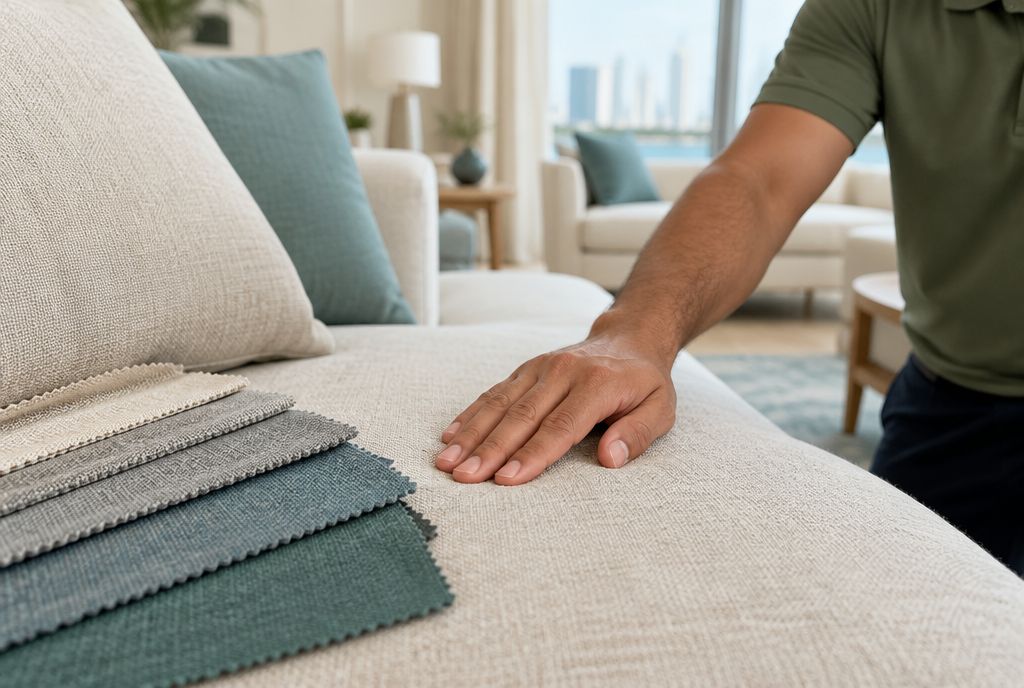
Upholstery cleaning is the deep cleaning of fabric and leather furniture, such as sofas, armchairs, dining chairs, headboards and ottomans, using a method chosen for the material. The single most useful thing to know before you clean is the fabric code on the manufacturer's label, because it tells you whether the fabric can take water, solvent, both or neither.
What upholstery cleaning covers
Upholstered furniture collects much more than it shows: fine dust and sand, body oils, sweat, food, pet hair and dander, and odours from cooking and humidity. Vacuuming lifts the loose surface dust, but oils and ground-in dirt sit lower in the fibres and padding. Professional upholstery cleaning aims to remove that deeper soiling without damaging the fabric, its colour or its shape.
The same principles apply to every soft piece in the home, which is why sofa, mattress, carpet and curtain cleaning are usually done by the same team with similar equipment.
Fabric cleaning codes: W, S, W/S and X
Many furniture manufacturers use a simple letter code on the care label, usually found under a seat cushion, on the deck of the sofa or underneath the frame. It's a widely used furniture-industry convention rather than a legal standard, so treat it as general guidance and always follow your own manufacturer's label and instructions where they differ.
| Code | What it generally means | Practical meaning |
|---|---|---|
| W | Water-based cleaning | Can be cleaned with water-based solutions, including extraction. The most forgiving fabrics. |
| S | Solvent-based cleaning only | Water can leave rings, shrink or distort the fabric. Needs a solvent-based, dry-cleaning approach. |
| W/S (or SW) | Water or solvent | Either can be used, but a test on a hidden area is still wise. |
| X | Vacuum or light brushing only | No water or solvent. Professional cleaning is usually limited to careful dry methods. |
No label? Don't guess. Many sofas lose their labels or never had one. Tell the cleaner what you know about the fabric, and expect them to test on a hidden area before choosing a method.
The main upholstery cleaning methods
Hot water extraction
A cleaning solution is applied and extracted straight away with strong suction. It's the most thorough option for durable W and W/S fabrics, such as most polyester, microfibre and many cotton blends. It leaves the fabric damp, so drying time matters.
Low-moisture cleaning
Much less water, applied with a pad, brush or fine mist and lifted off quickly. Used for fabrics that tolerate a little water but not a lot, such as some velvets and natural fibre blends, and when furniture needs to be usable sooner.
Solvent or dry cleaning
Used for S-coded fabrics. A solvent-based cleaner dissolves oils without the swelling and water-marking that water can cause. It's applied sparingly and the room is ventilated.
Leather care
Leather is cleaned with a leather-specific product and then conditioned. In the UAE, where AC keeps indoor air dry for much of the year, conditioning helps prevent the surface drying out and cracking.
Common fabrics and what to expect
- Polyester and microfibre: usually clean well and are common in family sofas. Microfibre can water-mark if cleaned unevenly, so technique matters.
- Cotton and linen: can shrink or brown if over-wetted. Often cleaned with controlled moisture.
- Velvet: needs the pile brushed in one direction while drying, or it can look patchy.
- Viscose and rayon blends: delicate when wet; prone to water rings and browning.
- Leather and faux leather: wiped, never soaked.
What a professional upholstery clean involves
- Inspection, label check and colour test on a hidden area.
- Thorough vacuuming, including seams, crevices and under cushions.
- Pre-treatment of stains and heavily soiled areas.
- The main clean, using the method suited to the fabric.
- Grooming the fabric so it dries evenly.
- Drying and aftercare advice.
Upholstery is usually priced per seat or per piece. For how quotes are built, see our guide to sofa cleaning prices in Sharjah; for rugs and fitted carpets, see how carpet cleaning cost is worked out.
Aftercare: the first 24 hours
- Keep the AC on and air moving with a fan if you can.
- Don't sit on damp fabric, and keep children and pets off until it's fully dry.
- Put cushions back only once both the cushion and the frame are dry.
- Avoid placing damp furniture in direct sun, which can fade some fabrics.
- Don't put coloured throws or newspapers on damp upholstery, as dye can transfer.
Keeping upholstery clean between professional cleans
- Vacuum weekly with an upholstery attachment.
- Flip and rotate loose cushions so they wear evenly.
- Blot spills straight away; don't rub. Check the fabric code before using any cleaner.
- Use washable throws on favourite pet spots.
- Keep furniture out of strong direct sunlight where possible.
Mattresses follow many of the same rules; our guide to professional mattress cleaning covers what's different about them. At Tip Top, upholstery cleaning uses low-odour, non-toxic products as standard, and we confirm the price per item after a quick assessment.